
Nitrogen & Nitro Coffee
Why Coffee Bags Have One-Way Valves
Freshly roasted coffee keeps releasing carbon dioxide after it leaves the roaster. That gas is normal. It is part of the coffee continuing to settle after heat, pressure, and roast development. But inside a sealed package, the same gas creates pressure. A very fresh coffee sealed in an ordinary airtight bag can puff up, stress seams, or compromise the package.
The small round valve on many coffee bags is a one-way degassing valve. It lets carbon dioxide escape from inside the bag while helping block outside oxygen from entering. In plain English, it lets the coffee breathe out without forcing the bag to breathe in.
That one-way direction is the important part. Oxygen is one of roasted coffee's main enemies. Too much exposure dulls fragrance, softens sweetness, and moves the cup toward stale, papery, or flat flavors. A valve gives fresh coffee somewhere to release gas without turning the package into an open door for oxygen.
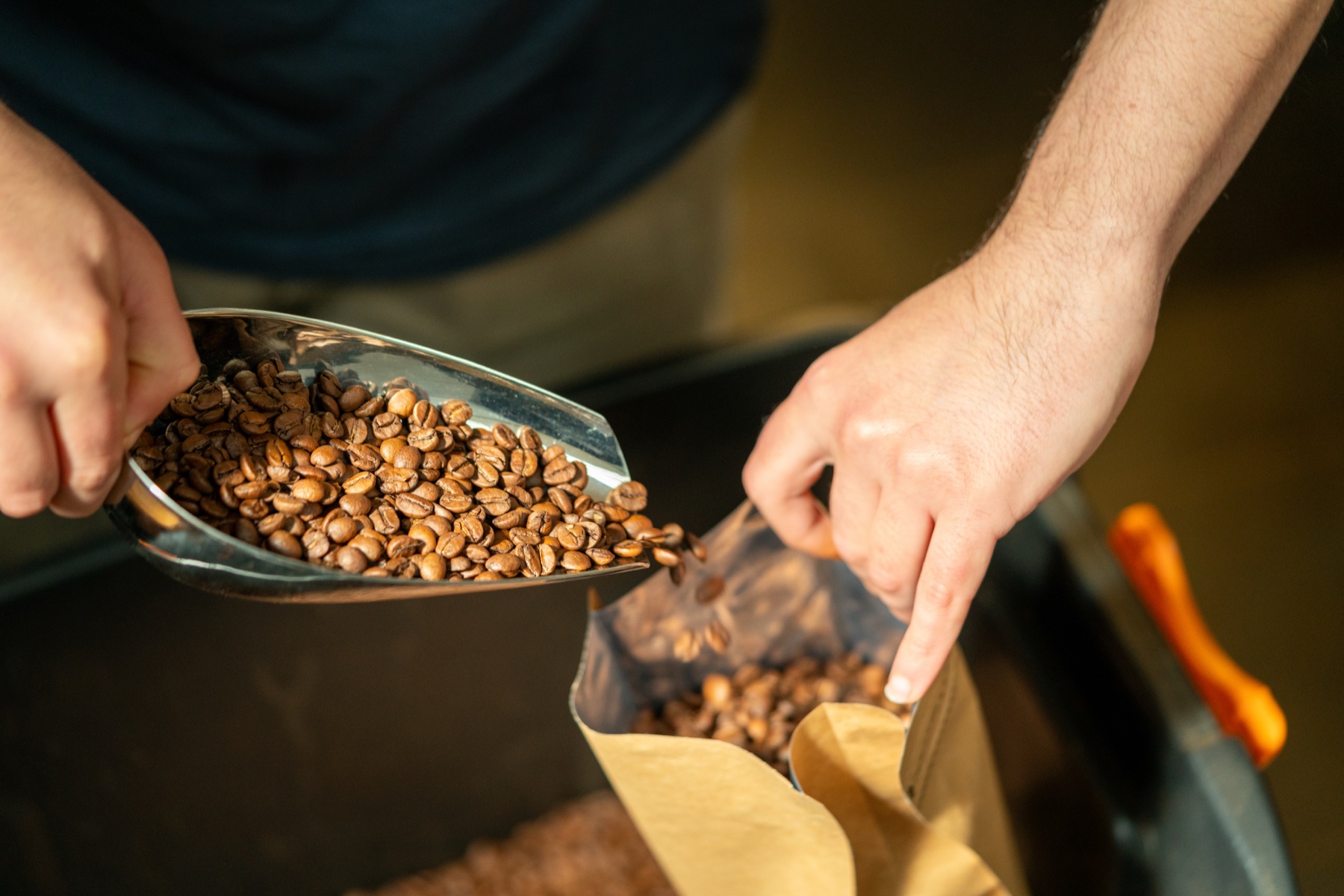
Valves are especially useful for whole bean coffee because the beans continue to release gas after roasting. Different coffees degas at different speeds depending on roast level, density, processing, and how soon they are packaged.
Café de Volcán only uses one-way valve bags for our roasted coffee. The point is not cosmetic. A valve protects the practical journey between roasting, shipping, storage, and brewing, so the coffee can arrive with more of its aroma and structure intact.