
Troubleshooting
When Coffee Tastes Weak: Strength Versus Extraction
A cup can feel underpowered for reasons that are not about extraction at all. Strength — the concentration of coffee in the water — is controlled by the ratio of coffee to water, not by how much of the bean was extracted. A cup can be fully extracted and still feel light if the ratio leaned toward more water than the drinker prefers. The science measures these two qualities separately. Strength is measured as Total Dissolved Solids (TDS) — the percentage of the brewed liquid's weight that consists of coffee compounds. Extraction is measured as the percentage of the dry coffee's mass that dissolved into the brew. The SCA's optimal strength range for filter coffee is 1.15% to 1.45% TDS, with extraction sitting between 18% and 22%. A cup can land in the optimal extraction window while still falling below the optimal strength range if the ratio diluted the concentration.
Before adjusting grind or time, it helps to consider the ratio first. A common starting point for filter brewing is 1:16 by weight. Drinkers who prefer a fuller, more present cup often move to 1:15 or 1:14. The extraction stays roughly the same — the cup simply carries more coffee per ounce, and the body and aroma arrive with more weight.
Specific adjustments by method help locate where to focus when a cup feels weak.
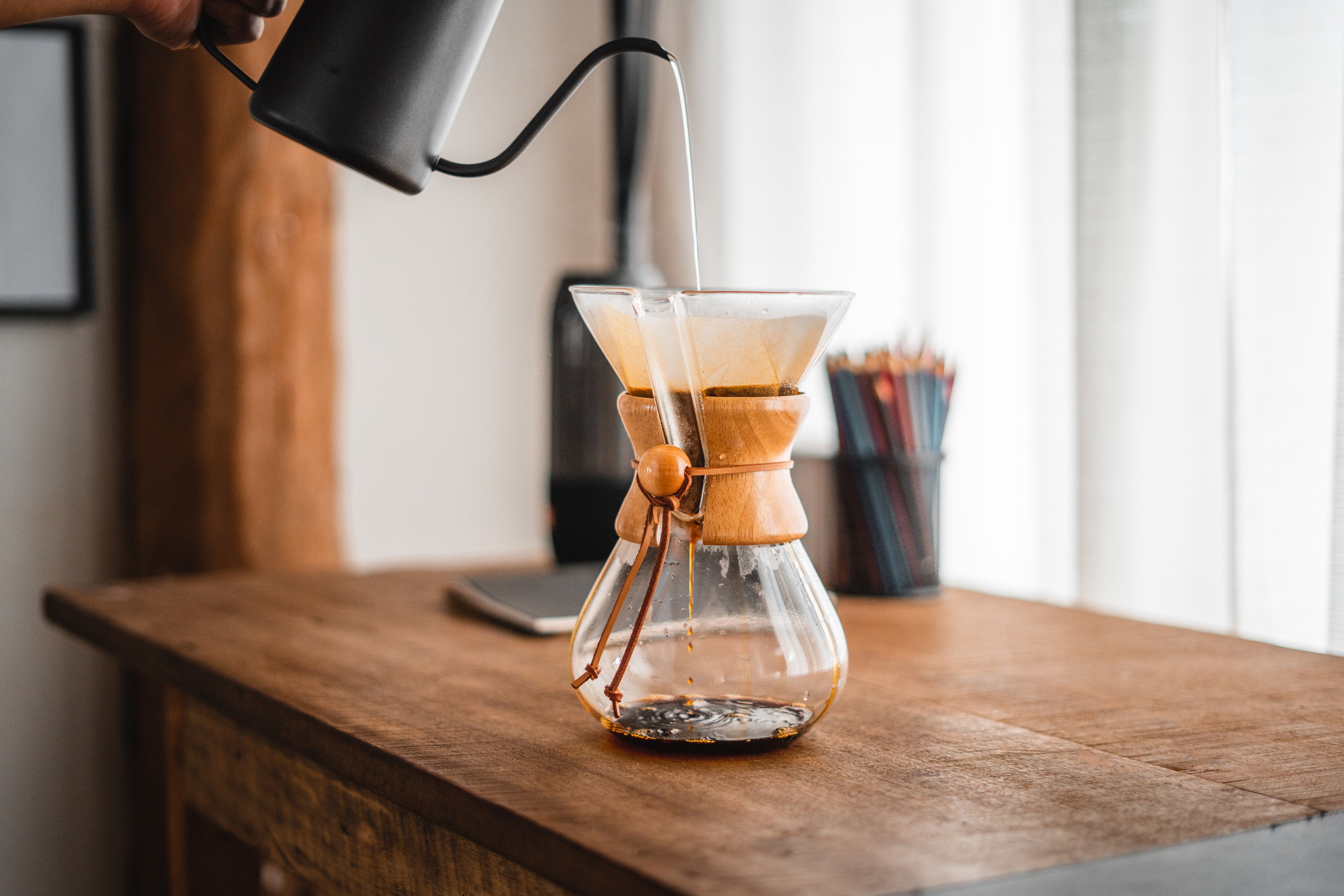
For pour-over like V60 or Kalita Wave, the most common weak-cup fix is shifting the ratio from 1:16 to 1:15. A 20-gram dose with 320 grams of water becomes a 20-gram dose with 300 grams of water, which produces a noticeably stronger cup with the same extraction percentage. If the cup still feels weak after the ratio change, the next adjustment is grinding 1-2 settings finer to deepen extraction within the new ratio. Brewers who want maximum body push to 1:14 ratios, though the cup may begin tasting heavy if the brewer's actual preference was just for more strength rather than more extraction.
For espresso, weak shots usually trace to under-dosing or excessive yield rather than ratio in the filter sense. The standard espresso ratio is 1:2 — 18 grams of coffee producing 36 grams of liquid yield. Shots that taste weak often pulled to 1:2.5 or 1:3, producing more volume but lower concentration. Pulling shorter to a 1:1.5 ristretto ratio (18 grams in, 27 grams out) produces dramatically more concentrated shots with intense flavor. The dose itself can also be increased to 19-20 grams in the same basket while keeping the 1:2 ratio, producing fuller shots with more substance per ounce.
For French press, weak cups respond well to ratio adjustments because the immersion method produces consistent extraction across a range of ratios. Shifting from 1:15 to 1:14 or 1:13 produces fuller cups without requiring grind or time changes. A 30-gram dose with 450 grams of water becomes 30 grams with 420 grams or 30 grams with 390 grams. The extraction stays roughly constant during the 4-minute steep regardless of ratio, so adjusting ratio gives the brewer a clean lever for strength without affecting other variables.
For drip machines, the user's primary lever is dose because the machine's water volume is often fixed by the carafe size. Increasing the dose from 60 grams to 70 grams for a 1-liter carafe produces a stronger cup with similar extraction characteristics. Some drip users compensate by brewing at the manufacturer's recommended dose but using less water than the maximum capacity — running 800ml of water through a basket sized for 1L produces stronger cups than running the full liter while keeping the dose constant.
Strength and extraction are two different levers, and each responds to different adjustments. Adding more coffee to a cup that already extracts well is often the most direct path to a fuller feeling. Café de Volcán encourages brewers to taste their cup first, decide whether it is strength or extraction they want to shift, and adjust the corresponding variable without changing both at once.