
Quality Standards
What Makes Coffee 'Specialty' Part 1: The SCA Scale and How Cupping Works
Specialty coffee is defined by a specific measurement: a score of 80 or higher on the Specialty Coffee Association's 100-point cupping scale. Above this threshold, coffee qualifies as specialty and commands the prices, attention, and care that the specialty industry provides. Below it, coffee is classified as commodity grade and trades on different markets entirely.
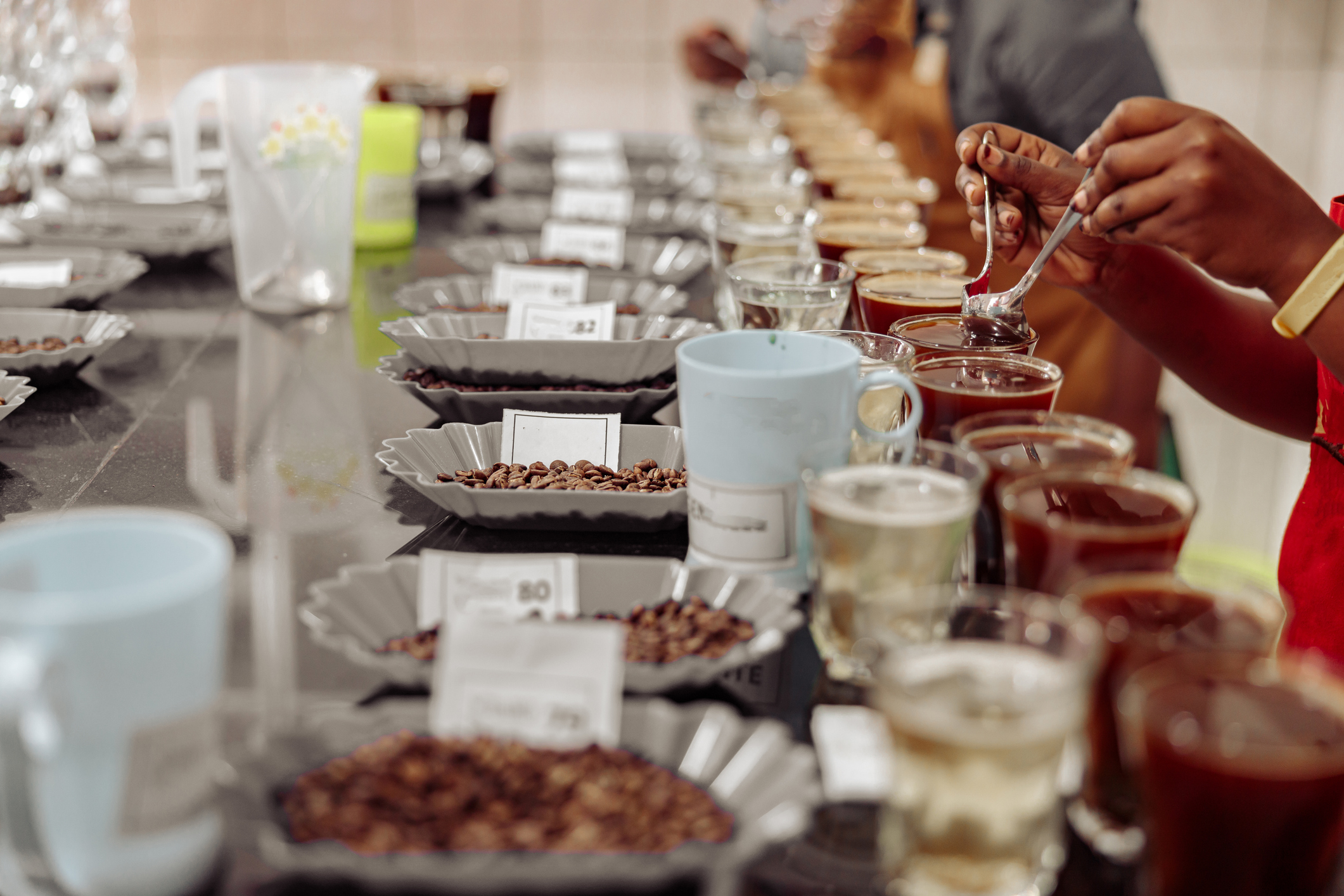
The cupping protocol that produces these scores is itself precise and standardized. Trained cuppers evaluate coffee samples following a specific procedure: 8.25 grams of coffee ground to a defined coarseness, brewed in 150 grams of 93°C (200°F) water for 4 minutes, then evaluated through a sequence of sensory checkpoints. Cuppers break the crust at the 4-minute mark, smell the released aromatics, and proceed to taste the coffee at multiple temperatures as it cools. The evaluation continues across roughly 15 to 30 minutes per sample as different qualities emerge at different temperatures.
The 100-point scale evaluates ten specific attributes, each scored on its own. Fragrance and Aroma evaluates the dry grounds and the wet coffee after brewing. Flavor captures the overall taste impression including primary notes and secondary characteristics. Aftertaste assesses how the flavor lingers and resolves after swallowing. Acidity evaluates the brightness and liveliness, distinguishing pleasant fruit-like acidity from sharp or sour qualities. Body measures the weight and texture of the coffee in the mouth. Balance evaluates how the elements work together as a unified cup. Uniformity checks whether multiple cups of the same coffee taste consistent. Clean Cup evaluates the absence of negative defects or off-flavors. Sweetness assesses the natural sweetness present. Overall captures the cupper's holistic assessment of the coffee's quality and character.
Each attribute is scored on a scale from 6 to 10, with the scoring discipline operating in 0.25-point increments. This quarter-point precision is essential to the scale's resolution. A coffee that earns 8.25 on Acidity differs meaningfully from one that earns 8.00 — the quarter-point reflects a real and detectable distinction in the cupper's assessment, not just rounding sentiment. Most attributes start from 6 (good) and move up through 7 (very good), 8 (excellent), 9 (outstanding), and 10 (exceptional), with the quarter-point increments at 6.00, 6.25, 6.50, 6.75, 7.00, and so on through the full scale. A skilled cupper distinguishes between 8.25 and 8.50 confidently, and the entire scale's reliability depends on this fine-grained scoring discipline.
Three attributes — Uniformity, Clean Cup, and Sweetness — are scored as binary checkpoints across multiple cups: each of five cups receives a 2-point check if it passes, producing 10 points if all five cups uniformly meet the standard. Defects detected in any cup reduce the score for that attribute by 2 points per affected cup, which produces dramatic point losses for inconsistent or defective lots.
The total of the ten attribute scores produces the final cupping score. A coffee that scores 8.00 on every attribute (excellent across the board with no defects) reaches an 80.00-point total. A coffee with several attributes scoring 8.25 or 8.50 alongside the 8.00s reaches into the low to mid-80s. Scores above 90 require multiple attributes scoring 9.00 or above with no significant defects across all five cups. The 0.25-point precision means that a coffee scoring 87.75 is genuinely distinguishable from one scoring 87.50, and these distinctions matter at auction and in commercial pricing.
The cupping itself is conducted in controlled conditions. Multiple cuppers evaluate the same coffees independently to reduce individual bias. Coffees are presented blind to prevent prior knowledge from influencing scores. Calibration sessions before formal cupping ensure the cuppers are aligned on what each score level represents. Q Graders, who hold the highest credential in coffee cupping, must pass extensive certification exams and recalibrate annually. The standardization makes scores meaningful across different cuppers, regions, and times — a coffee scored 86.25 by Q Graders evaluating Panamanian Geisha and scored 86.25 by Q Graders evaluating Costa Rican Caturra is genuinely the same quality tier, despite differences in origin, variety, and character.
Part 2 of this article covers why the 80-point threshold specifically marks the boundary between specialty and commodity coffee.