
Water Temperature
Water Temperature For Hot Coffee
Water temperature changes how quickly coffee extracts. Hotter water pulls flavor faster; cooler water slows the process. That affects sweetness, acidity, bitterness, body, and whether a cup feels clear or heavy.
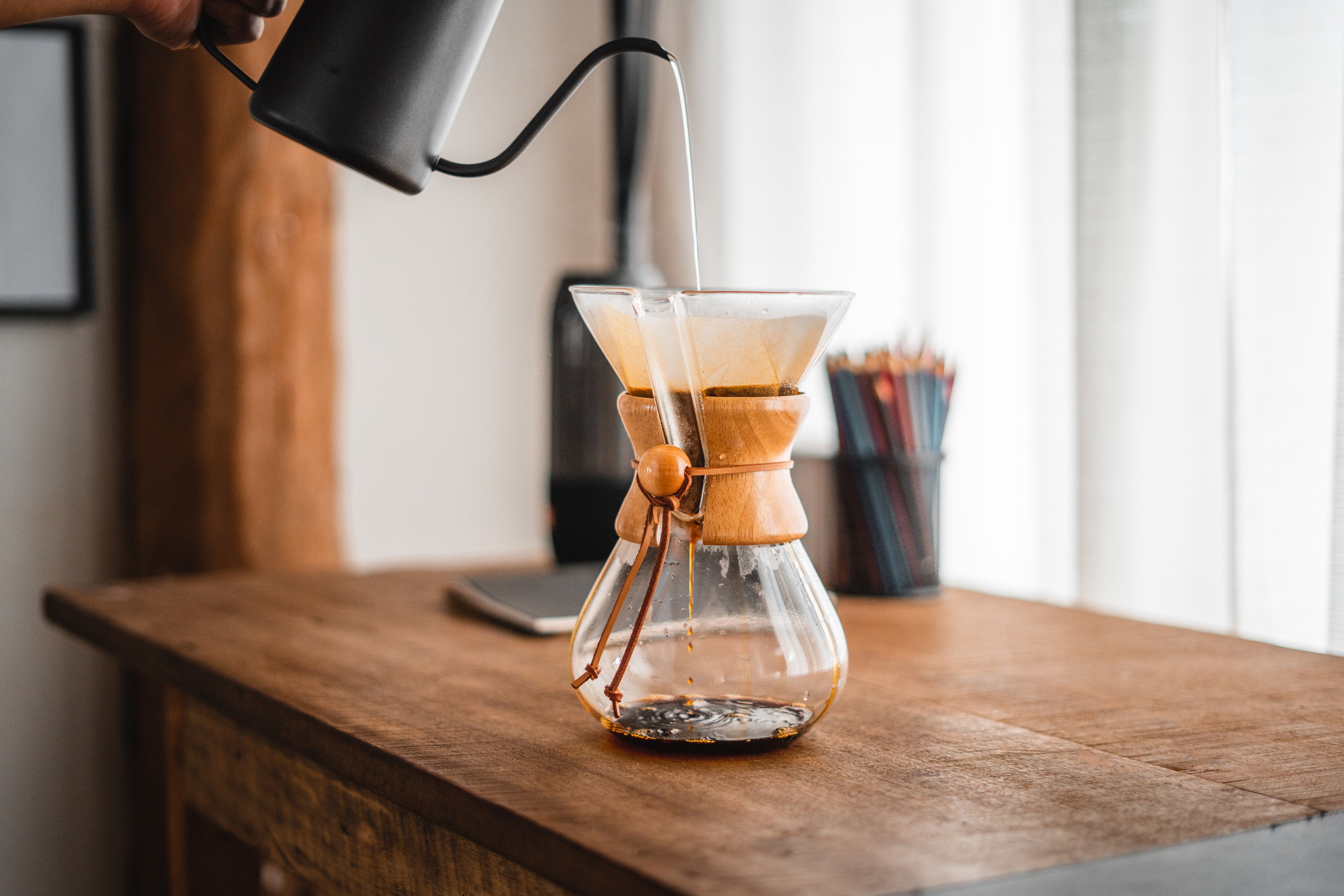
For most hot coffee, a useful working range is about 90 to 96°C (195 to 205°F). Pour-over and drip often sit near the upper part of that range, especially for lighter roasts that need help opening up. French press and other immersion brews can also live in that range, though slightly lower temperatures may soften bitterness in darker roasts. Espresso machines often brew around 90 to 96°C (194 to 205°F), with small changes making a noticeable difference because pressure and grind amplify extraction. Cold brew is the exception: it extracts slowly at room temperature or refrigerator temperature, using time instead of heat.
The roast matters. Lighter, denser coffees often tolerate hotter water because they are harder to extract. Darker roasts usually give up flavor more easily, so slightly cooler water can keep the cup from turning harsh, bitter, or dry. If a coffee tastes sour or thin, try a little hotter. If it tastes bitter or sharp in a roasted way, try a little cooler.
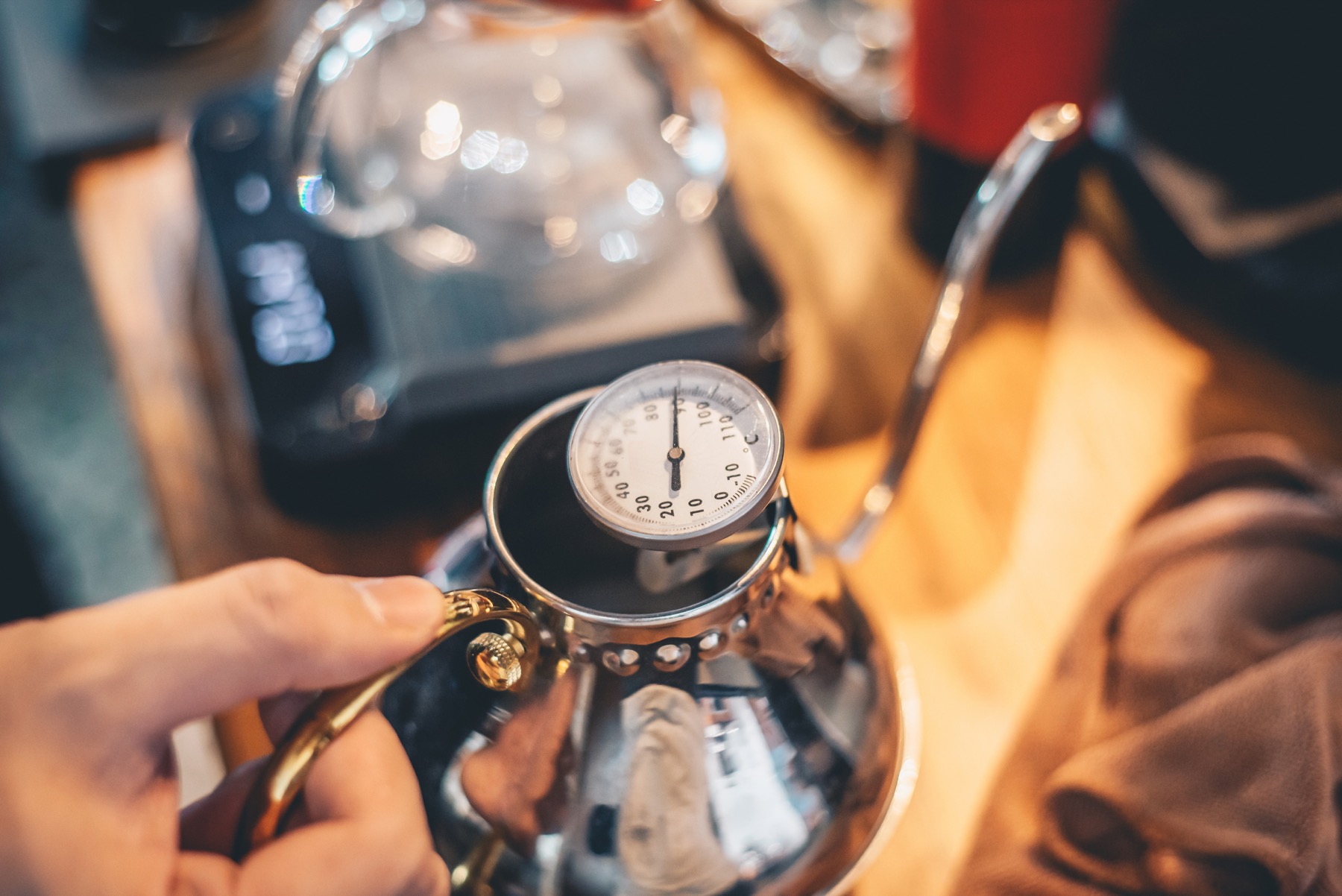
The easiest way to control temperature is a variable-temperature kettle. Set the target, let the kettle stabilize, and brew consistently. A digital thermometer also works well: heat the water, check the temperature, and pour when it reaches your target. A manual dial thermometer can work too, but it reacts more slowly, so give it a few seconds to settle before reading.
Without a thermometer, boil the water and let it rest briefly before brewing. At sea level, freshly boiled water is around 100°C (212°F), so waiting 30 to 60 seconds often brings it into a practical hot-brew range. Preheating the brewer and server helps prevent water from losing too much heat before it reaches the coffee. The goal is not laboratory precision; it is repeatability. Once you find the temperature that makes a coffee taste sweet, clear, and balanced, use that as your starting point for the next brew.