
Brewing Methods
Turkish Coffee: The Oldest Preparation Still Practiced
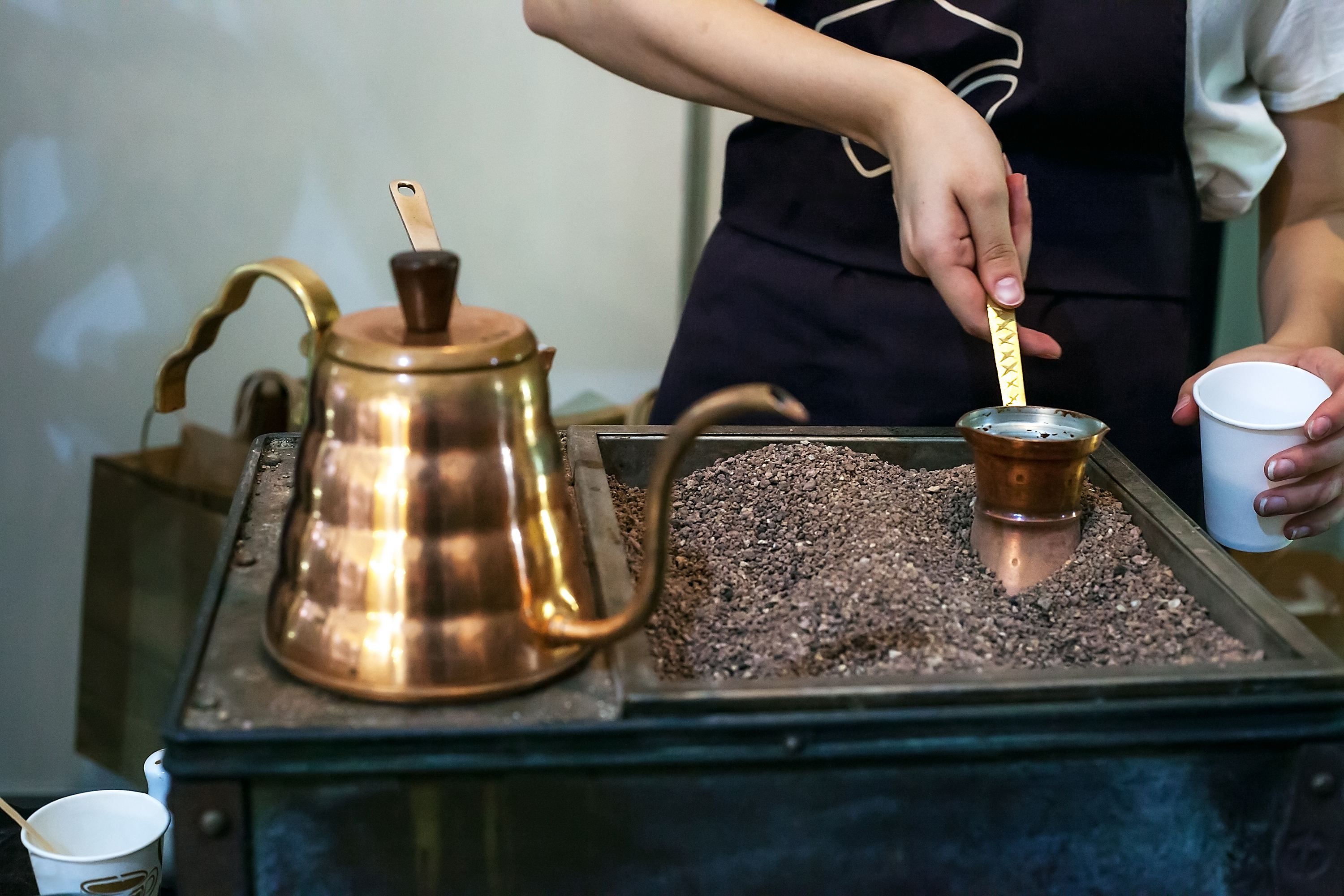
Turkish coffee is the oldest brewing method still in regular use. Very finely ground coffee, water, and sometimes sugar are combined in a small long-handled pot called a cezve, heated slowly until a thick foam rises to the top, and poured unfiltered into small cups. The grounds settle at the bottom, and the liquid above is what is drunk.
The cup is unlike anything produced by filter methods. Because the grounds remain in the coffee throughout the drinking, the texture is thick, the flavor dense and enduring, and the finish long. Turkish coffee is traditionally served with something sweet on the side — a piece of Turkish delight, a date, a small pastry — to balance its intensity. The grounds at the bottom are not drunk, but in some traditions they are read for fortune-telling after the cup is finished.
Turkish coffee belongs to a cultural context that reaches across the eastern Mediterranean, the Middle East, and the Balkans. Café de Volcán honors the method as a living tradition, one that has carried coffee through centuries of hospitality and routine, and that still rewards those who prepare it slowly and drink it attentively.