
Extraction Fundamentals
The Variables That Matter Most in Brewing
The variables in brewing can feel endless at first, but they reduce to a handful that shape the cup most. Grind size and ratio control how much coffee meets how much water. Temperature and time control how much of that coffee the water pulls into itself. Water itself shapes what can be extracted at all, because water with more mineral content and water with less behave differently in the filter.
Everything else is refinement around these core variables. Agitation, pour pattern, bloom duration, filter material, vessel shape — these shape the outcome in smaller ways, but the foundation is set by the four primary choices. The most rewarding path is to build familiarity with the core variables first, and to let the refinements emerge later as the palate becomes more attuned.
Each brewing method has its own typical settings for these core variables, and starting from method-specific baselines is faster than guessing.
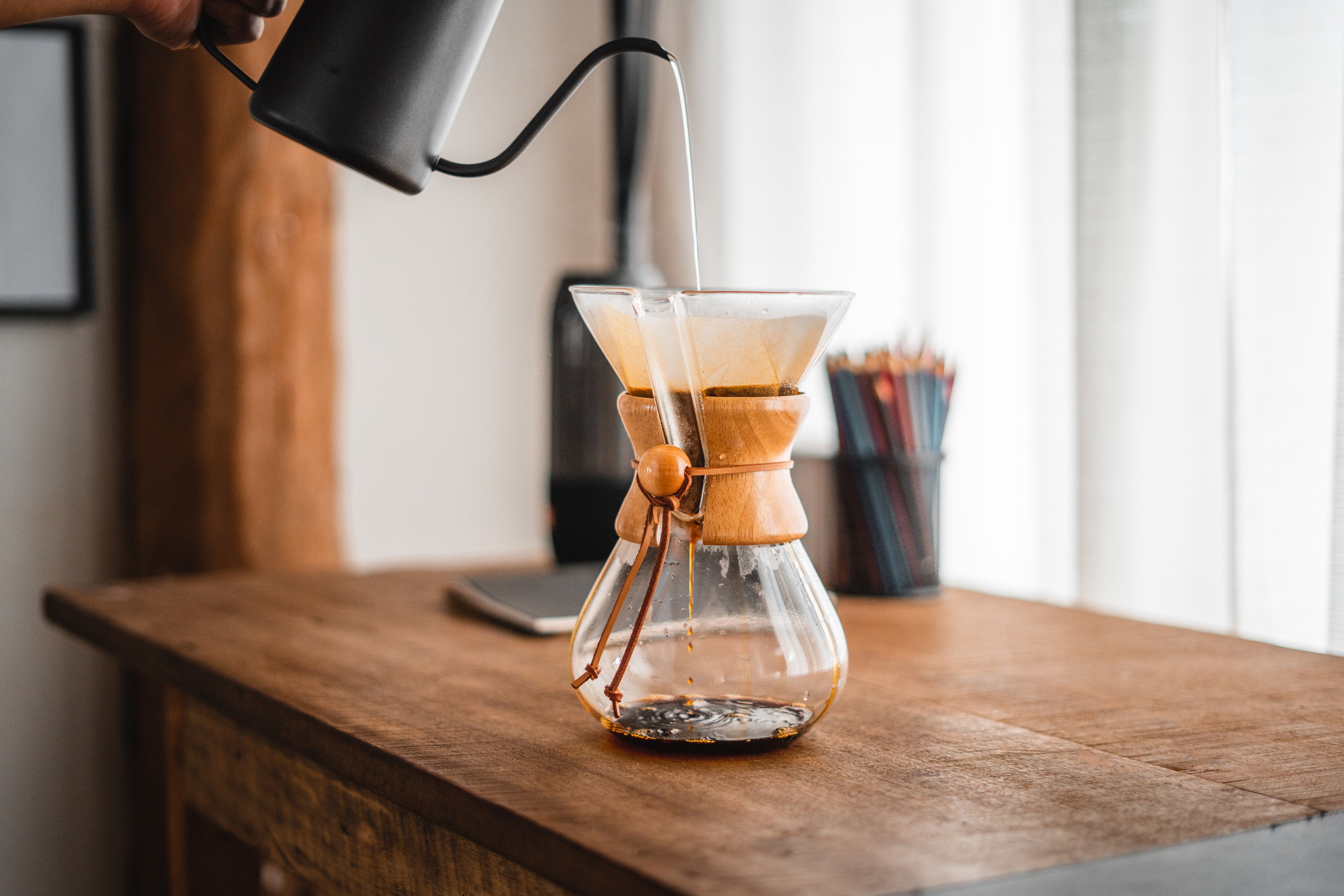
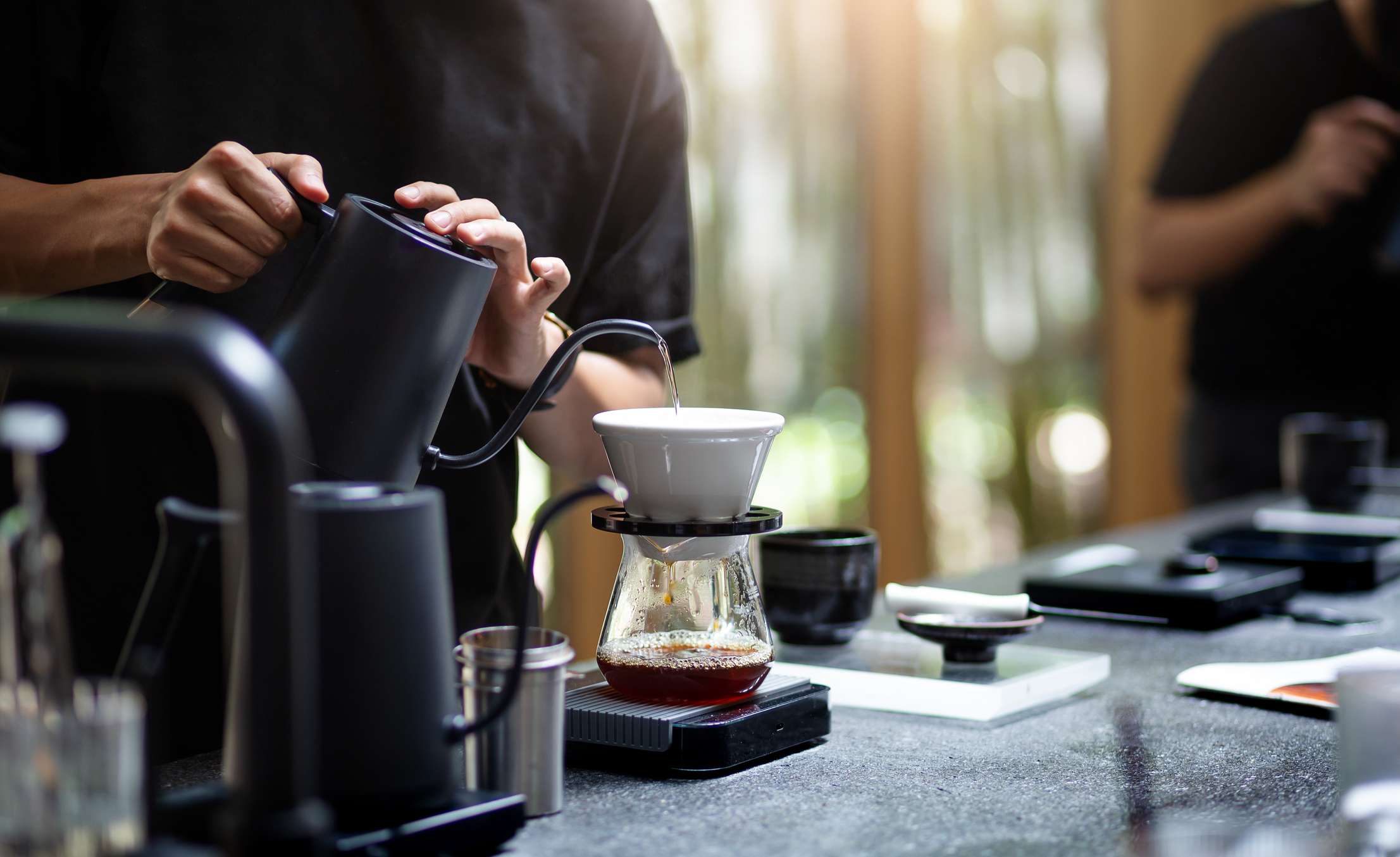
For pour-over like V60 or Kalita Wave, a good starting point is medium-fine grind (similar to table salt), 1:16 ratio of coffee to water, water at 94 to 96 degrees Celsius (201 to 205 degrees Fahrenheit), and a total brew time of 2:30 to 3:30 from first water contact to drawdown. A 20-gram dose of coffee with 320 grams of water brewed in 3 minutes is a reliable reference recipe that works across most light-to-medium roasted coffees. Adjust grind first when the cup lands off-balance, then ratio, then time, then temperature.
For espresso, the standard targets are 18 to 20 grams of coffee in the basket, 36 to 40 grams of liquid yield (a 1:2 ratio), 25 to 30 seconds of extraction time, and water at 92 to 94 degrees Celsius (198 to 201 degrees Fahrenheit). The grind is much finer than pour-over, similar to powdered sugar in texture. Espresso requires more precision because the variables compound quickly — a one-second difference in extraction time or a half-gram dose change produces noticeable cup differences. Adjust grind first when shots run too fast or too slow, then dose, then yield, then temperature.
For French press, the standard recipe is 1:15 ratio with coarse grind (similar to sea salt), water at 93 to 95 degrees Celsius (199 to 203 degrees Fahrenheit), and a 4-minute steep time before plunging. A 30-gram dose with 450 grams of water steeped for 4 minutes is a reliable reference. Adjust steep time first when the cup lands off-balance — extending toward 5 minutes for under-extraction, reducing toward 3 minutes for over-extraction. Grind size is the second variable to adjust, and ratio is the third. Temperature matters less in French press than in pour-over because the immersion holds heat steadily through the steep.
For drip machines, the user controls fewer variables because the machine handles temperature and pour rate automatically. The remaining adjustments are grind size, dose, and ratio. A medium grind (between pour-over and French press), 1:16 to 1:17 ratio, and the manufacturer's recommended dose for the brew basket size produces reliable cups. A 60-gram dose for a full carafe of about 1 liter is a reasonable starting point on most household drip machines. Adjust grind first when cups land off-balance, then dose. Quality matters substantially in drip — a $50 machine with shower-head water distribution produces dramatically more even extraction than a $25 machine with single-stream pouring.
Learning to brew well is learning which variable to adjust first when a cup lands in an unexpected place. A cup that leans bitter often asks for a coarser grind or a shorter contact time. A cup that lands thin often responds to a finer grind or a higher ratio of coffee. Café de Volcán encourages drinkers to experiment with these core variables first, because small tweaks there produce the largest differences in the cup.