

Brewing Methods
The Pour-Over: A Method That Rewards Precision
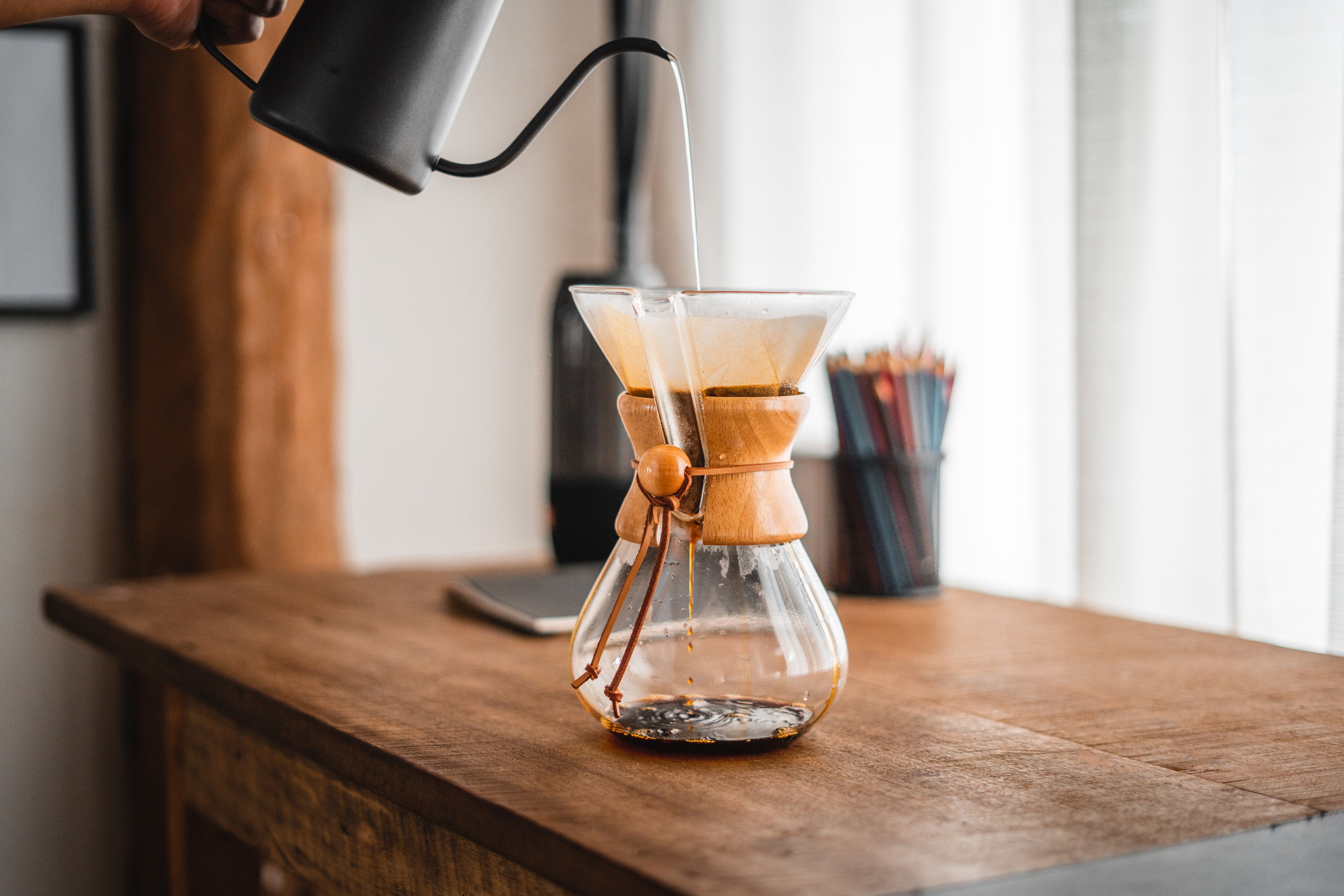
Pour-over coffee is one of the simplest ways to make coffee, and one of the most revealing. At its core, it is just ground coffee, a filter, hot water, and time. But because the brewer controls almost every part of the process, small choices can noticeably change the cup.
The water does not simply sit with the coffee. It moves through it. As it passes through the bed of grounds, it extracts sweetness, acidity, aroma, and texture in a controlled sequence. Done well, the cup can feel clean, expressive, and transparent.
There is not just one pour-over. Chemex, Hario V60, Kalita Wave, Origami, Fellow Stagg, Bee House, and other brewers all shape the flow of water differently. A Chemex uses a thicker paper filter and often gives a very polished, elegant cup. A V60 has a larger opening and rewards careful pouring. A Kalita Wave has a flat bottom, which can make extraction feel more forgiving. Each brewer has its own personality.
That variety is part of the appeal. Pour-over can be precise without being complicated. At home, someone might use an electric gooseneck kettle, a scale, and a ceramic dripper. Traveling, the same routine can become much simpler: a lightweight plastic dripper, paper filters, a hand grinder, and hot water from a hotel kettle, stovetop kettle, induction kettle, or even a camp stove. The method travels because the idea is small.
The water source matters too. An electric kettle gives speed and temperature control. A stovetop kettle brings a slower, more tactile rhythm. A gooseneck spout helps guide the pour, but it is not required to enjoy the method. Even without perfect equipment, pour-over teaches attention: how fast the water drains, how the coffee bed rises during the bloom, how aroma changes as the cup cools.
The best pour-over is not the most technical one. It is the one that helps the coffee speak clearly.