
Brewing Methods
The Chemex: Clarity Through a Heavier Filter
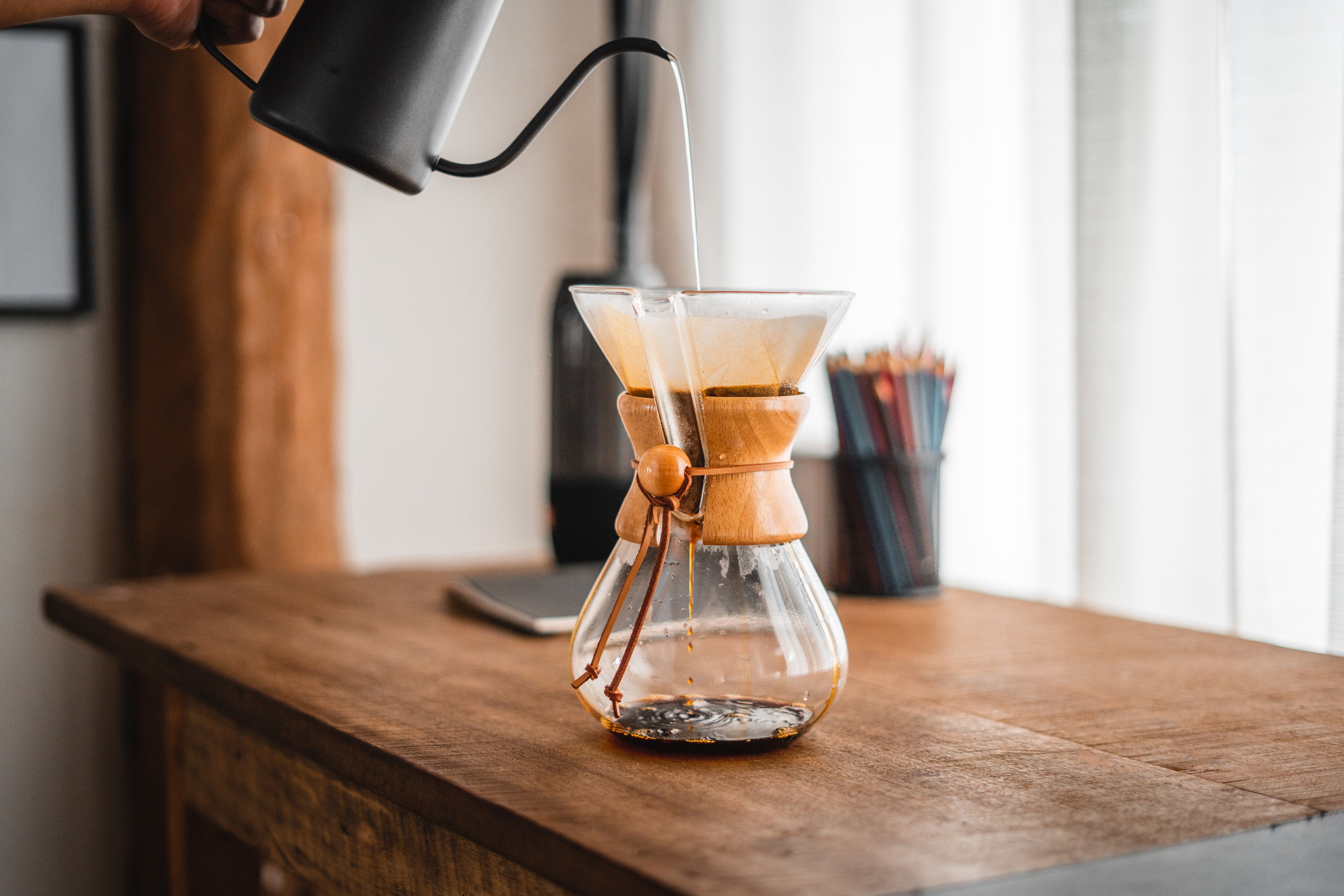
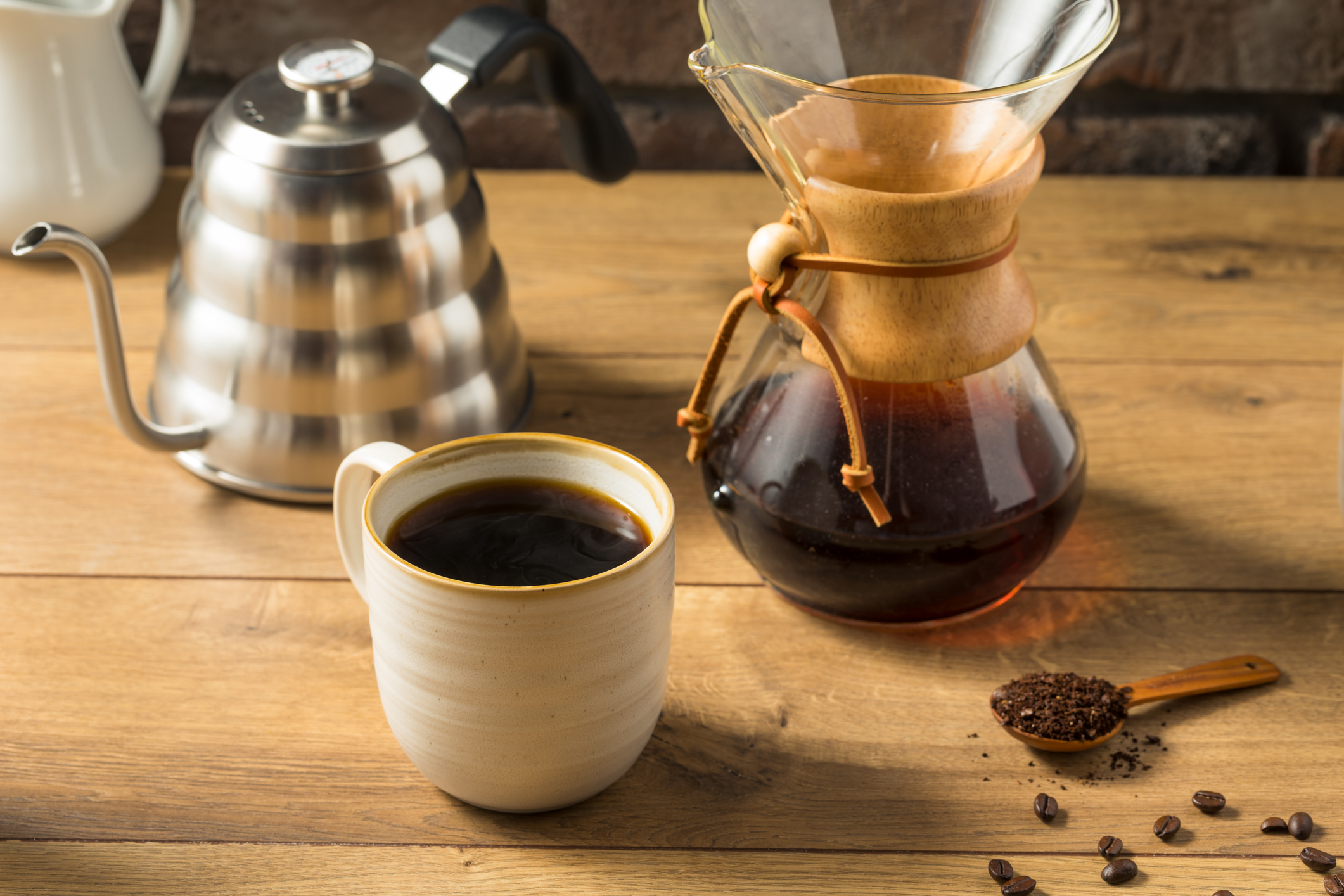
The Chemex is a pour-over device of distinctive glass design, named as much for the vessel as for the method. Coffee is placed in a thicker-than-usual paper filter set into the top of the hourglass-shaped flask, and hot water is poured over the bed. The brew passes through the filter and into the lower chamber, ready to be served or decanted.
The Chemex was invented in 1941 by Peter Schlumbohm, a German chemist who had emigrated to the United States and held over 300 patents across his career. Schlumbohm designed the Chemex by adapting laboratory equipment — a borosilicate glass funnel and Erlenmeyer flask joined into a single vessel — into a coffee brewer that combined scientific precision with elegant form. The wooden collar held in place by a leather tie, originally designed to insulate the heat-sensitive glass neck, became one of the most recognizable design signatures in twentieth-century housewares. Schlumbohm filed for the Chemex patent in 1941 and the device went into production immediately, finding its first market among American households during the war years.
The thicker filter is what defines the cup. Because it captures more of the coffee's oils and suspended particles than a standard pour-over filter, the resulting brew is exceptionally clear and bright. Flavors arrive crisp and articulated, without the heavier body that thinner filters allow through. Coffees with delicate florals, citrus, or tea-like qualities express particularly well in this vessel.
The Chemex is also a beautiful object defined by its classically gorgeous wooden collar with leather tie. Its design has remained essentially unchanged since 1941 and has earned a place in the permanent collections of the Museum of Modern Art and the Smithsonian. Ilonna Schlumbohm continued the company and the Chemex is still manufactured by the family-owned company in Massachusetts. Café de Volcán sees in the Chemex a quiet pairing of form and function — a vessel that produces a clean, articulate cup while also carrying the pleasure of being looked at while it brews.