
Brewing Methods
How To Brew Pour-Over Coffee
Pour-over coffee rewards attention, but it does not need to become a rigid ceremony. Think of the recipe as a starting map, not a law. The best cup is the one that tastes alive to you.
Begin with a medium-fine grind, somewhere between table salt and fine sand. If the coffee tastes thin, sharp, or hollow, the grind may be too coarse. If it tastes bitter, dry, or heavy, it may be too fine. Grind size controls how quickly water can pull flavor from the coffee, so small changes can make a real difference.
A useful starting ratio is 1 gram of coffee to 15 or 16 grams of water. For one generous cup, that might be 20 grams of coffee and 300 to 320 grams of water. More coffee gives the cup more intensity. More water gives it more openness. Neither is “right” by itself. Ratio is how you decide the shape of the cup.
Use water just off the boil, around 90 to 96°C (195 to 205°F). Lighter roasts often enjoy the higher end of that range because they need a little more heat to open. Darker roasts may taste smoother with slightly cooler water. Temperature changes extraction, but it also changes mood: hotter water can make a coffee feel vivid and ringing, while cooler water can make it feel softer and rounder.
Start with a bloom. Pour just enough water to wet the grounds, usually about twice the weight of the coffee, and wait 30 to 45 seconds. This is when trapped carbon dioxide escapes and the bed of coffee begins to wake up. The bloom should swell slightly, release aroma, and settle into readiness.
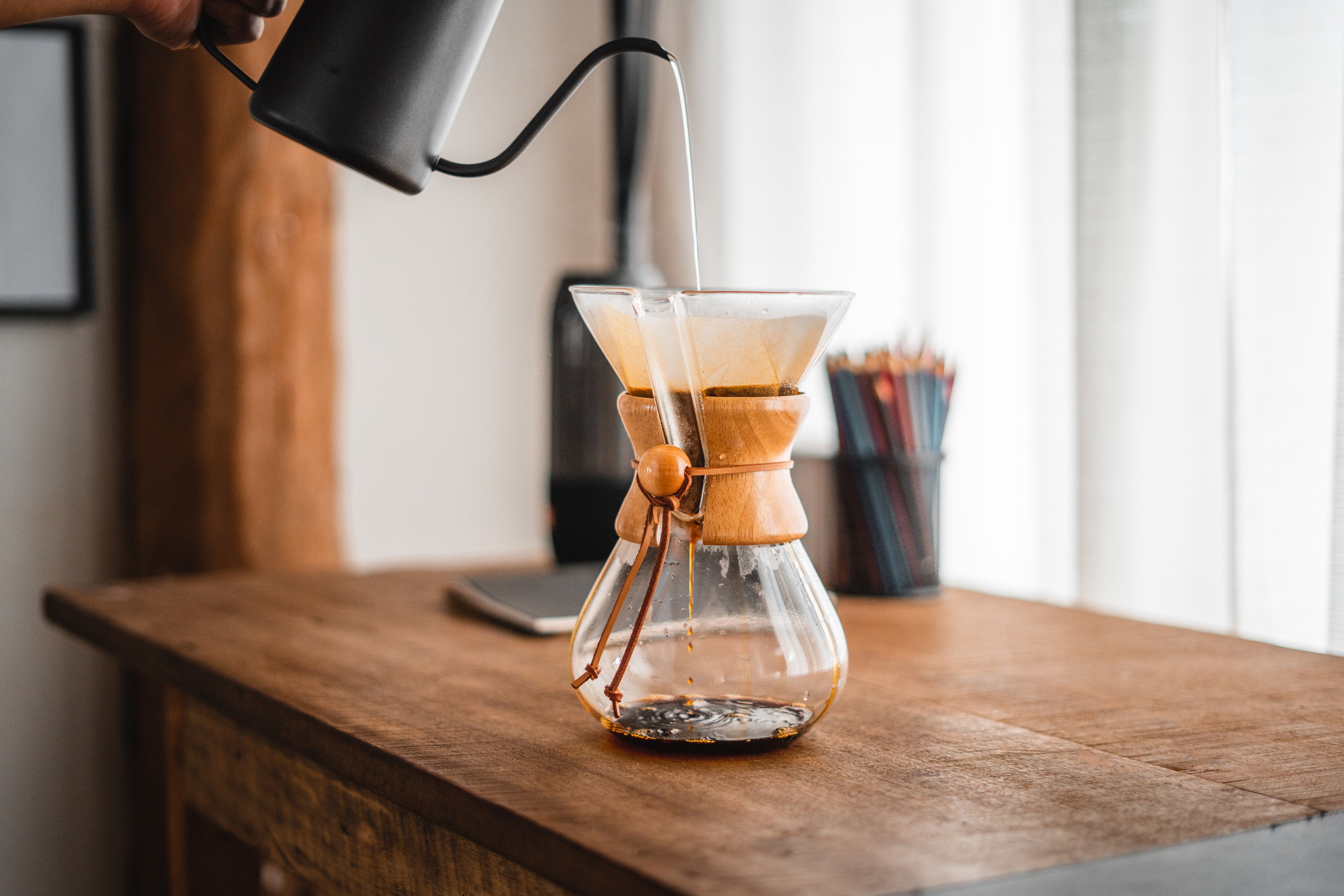
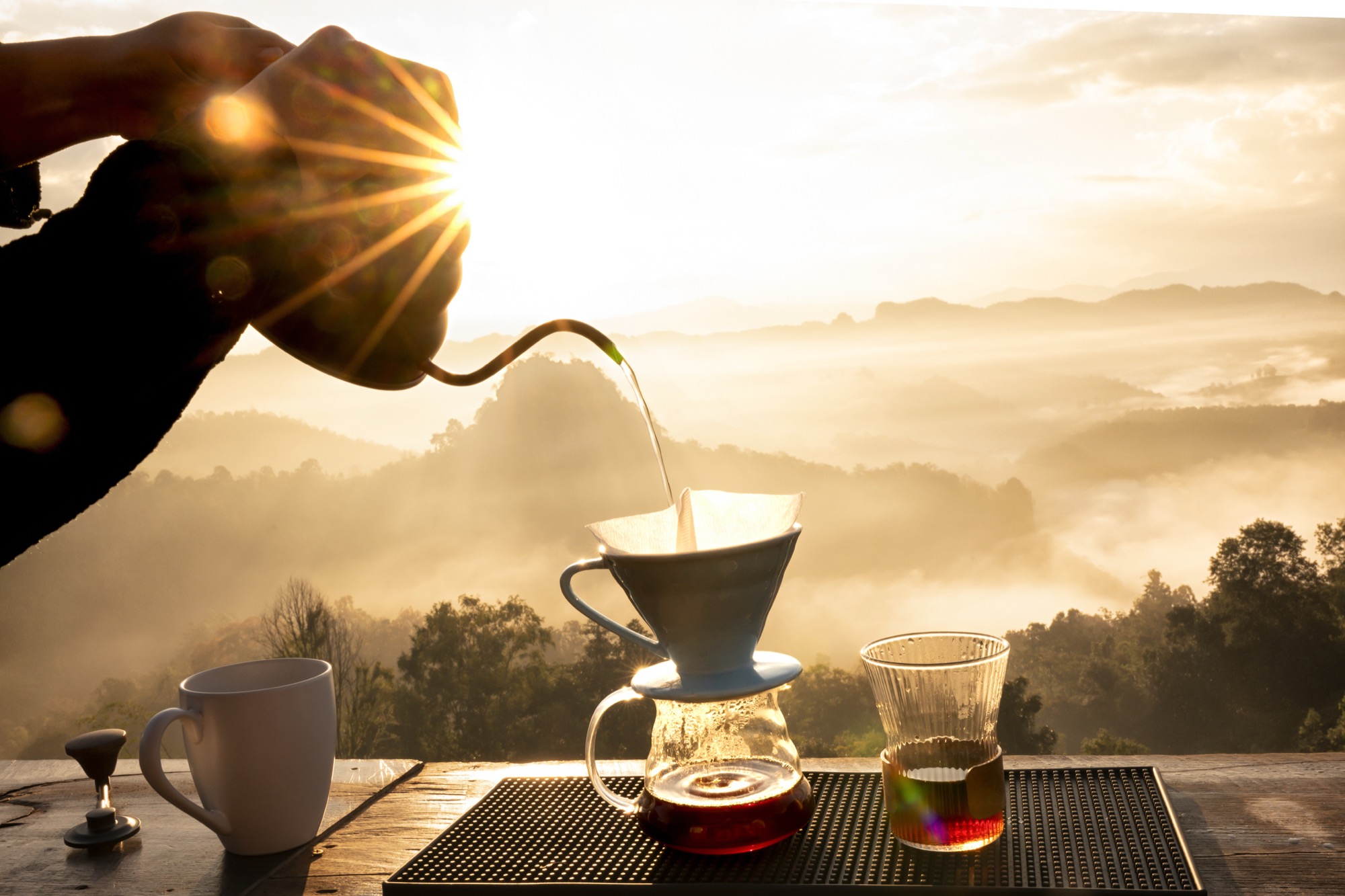
After the bloom, pour slowly in circles, keeping the coffee bed evenly wet. You do not need to perform perfect spirals. Just move with care. Avoid flooding the edges too much, and try not to let the bed dry out completely between pours. The goal is even extraction: sweetness, acidity, aroma, and texture arriving together instead of pulling in different directions.
A general extraction time is about 2.5 to 4 minutes, depending on the brewer, grind, dose, and coffee. If the water races through, the cup may taste underdeveloped. If it stalls, the cup may taste heavy or bitter. Time is useful, but taste is the real judge.
Use the guidelines, but the amazing thing about pour-over is the ability to change so many components easily. Change the grind. Shift the ratio. Try a slightly cooler pour. Let a fruit-forward coffee be delicate, or let a chocolatey coffee be fuller.