
Freshness & Storage
How Do You Know When Coffee Has Gone Stale?
Stale coffee announces itself clearly to attentive drinkers. The aroma, when the bag is opened, feels thin or flat rather than lively. The cup loses its brighter notes first, becoming duller and more one-dimensional. Acidity fades, sweetness softens, and the finish shortens. In late stages of staleness, coffee can develop a cardboard-like papery quality, or a faint rancid edge from oxidized oils.
What's worth knowing is the specific chemistry behind this decline. Coffee staling is primarily driven by lipid oxidation — the gradual reaction of coffee's oils with oxygen in the air. Coffee beans contain roughly 15% lipids by weight, and these oils are particularly prone to oxidation because they contain unsaturated fatty acids whose double bonds break down readily when exposed to oxygen. The breakdown products include aldehydes and other compounds that produce the characteristic stale flavors — particularly the cardboard quality (caused by trans-2-nonenal, the same compound that produces the "old" smell in stale beer) and the rancid edge in late-stage staleness. This is also why dark roasts go stale faster than light roasts: darker roasting brings more lipids to the bean's surface, where they have more contact with oxygen.
Aromatic compound loss happens alongside lipid oxidation but through a different mechanism. The volatile compounds responsible for coffee's complex aroma — including 2-furfurylthiol (the compound that produces "freshly brewed coffee" smell), various pyrazines (toasted, nutty notes), and esters (fruity notes) — slowly evaporate from the bean over time. Whole beans retain these compounds longer than ground coffee because the bean's structure traps volatiles that grinding releases. Ground coffee loses 60% of its aromatic intensity within 15 minutes of grinding, which is why grinding immediately before brewing matters so much. Whole beans degrade more gradually but still lose roughly half their aromatic potency within 3-4 weeks of roasting.
The signals appear gradually, and drinkers adjust to them without always noticing. A coffee that seems fine at four weeks after roasting may have drifted substantially from its freshness peak, and only a side-by-side comparison with a fresh batch reveals how much has been lost.
Storage conditions dramatically affect the rate of staling. Coffee stored in airtight containers stales roughly 2-3 times slower than coffee in the original bag with a one-way valve. Coffee stored at cool temperatures stales slower than coffee in warm kitchens. Coffee stored away from light retains aromatics longer than coffee on bright counters. Vacuum-sealed storage can extend usable freshness from 3-4 weeks to 6-8 weeks by actively pulling oxygen from the container.
Counterintuitively, freezing coffee in airtight containers actually preserves freshness effectively, contrary to common advice against it. The damage from freezing comes from moisture exposure during repeated thawing, not from the freezing itself. Coffee frozen in vacuum-sealed portions and used directly from frozen (without thawing) maintains aromatic compounds for months rather than weeks. This is how professional roasters and coffee researchers store reference samples for long-term comparison.
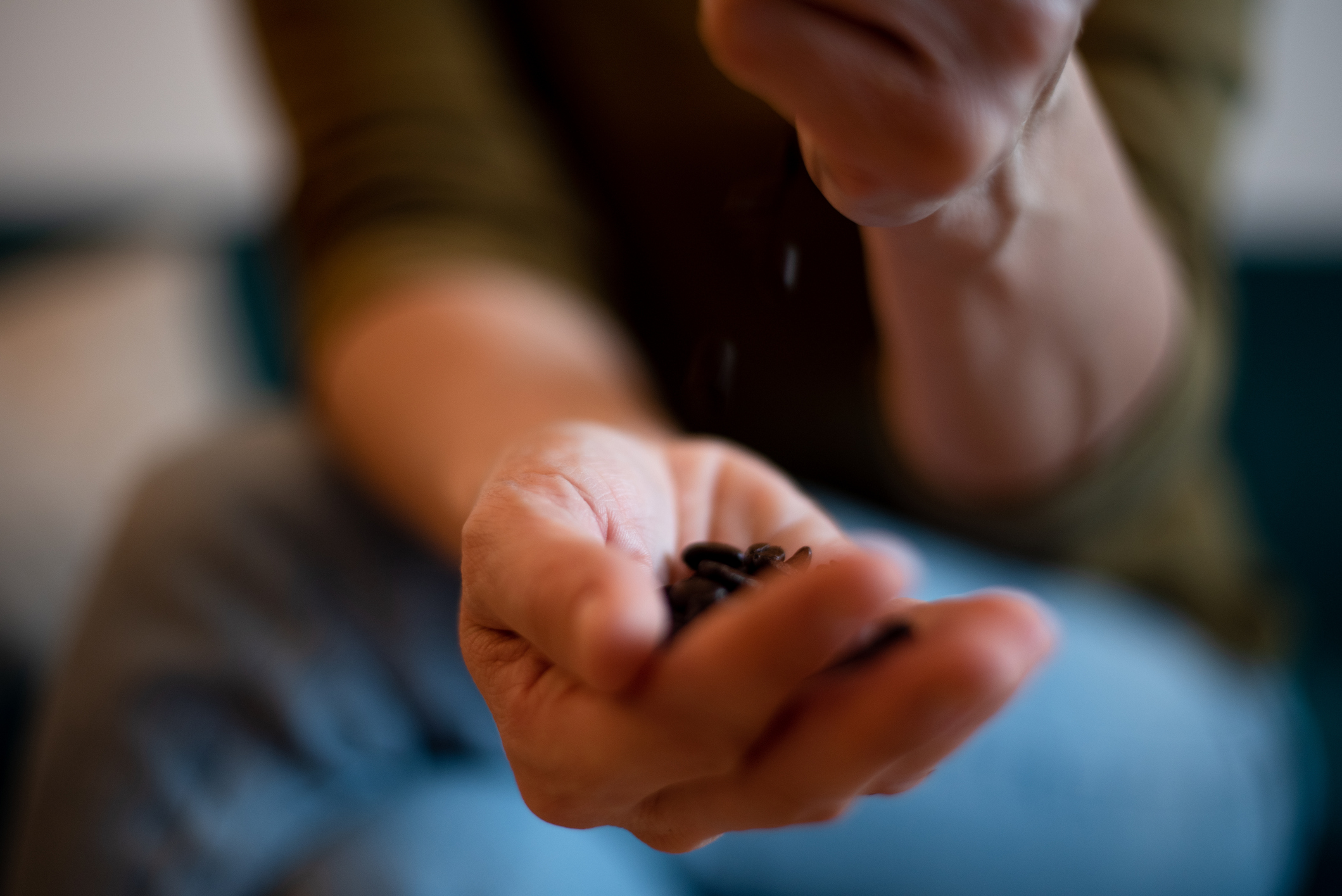
The strongest check is to smell the ground coffee before brewing. Fresh grounds release an intense, complex aroma that fills the room. Stale grounds produce a dull, muted scent — still recognizably coffee, but without the lift of a recently roasted bean. Café de Volcán suggests drinkers pay attention to the smell of their coffee at grinding as a simple ongoing calibration for freshness.