
Pour Over
Grind Size For Pour-Over Coffee
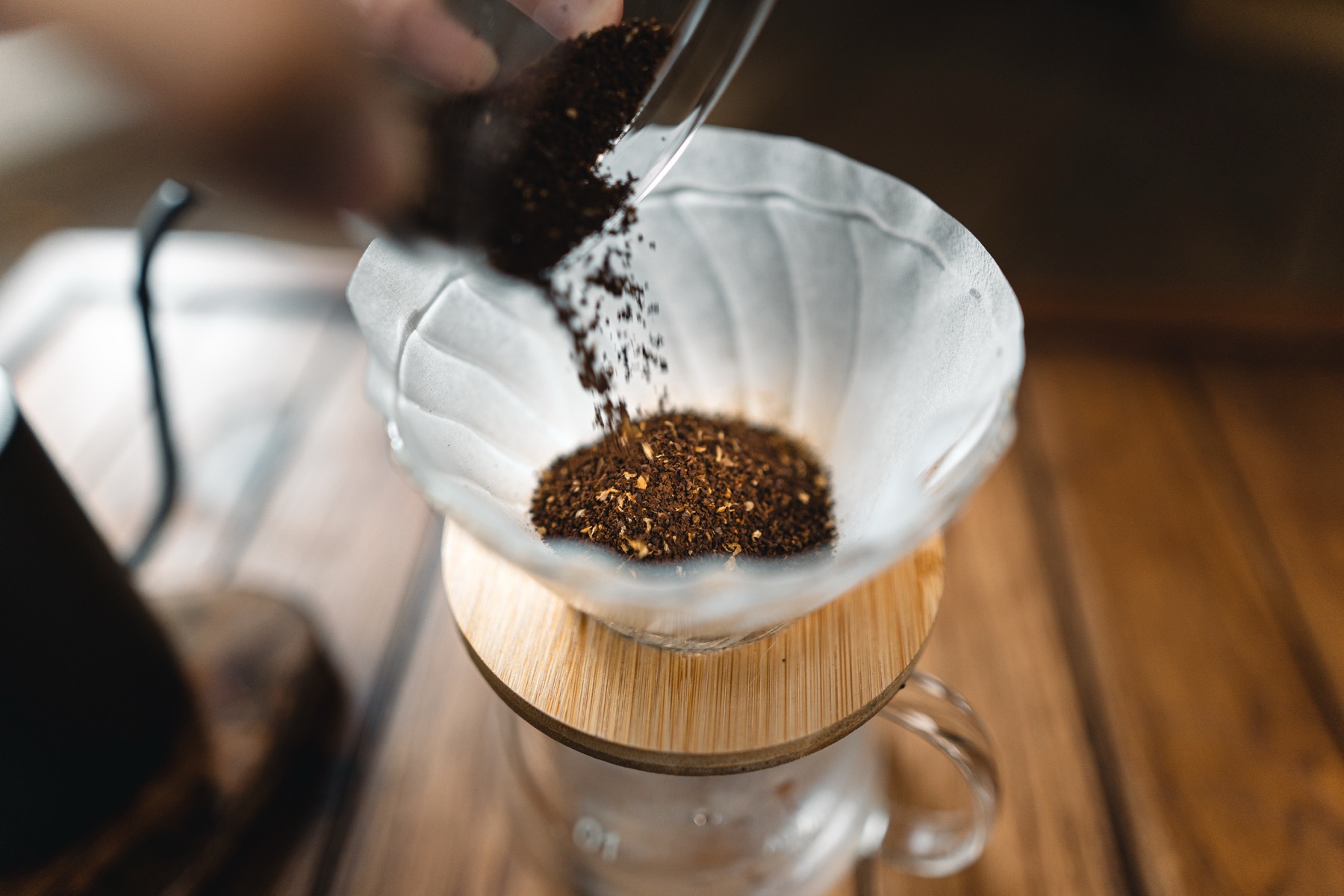
Grind size is one of the fastest ways to change a pour-over. The general starting point is medium to medium-coarse: finer than French press, much coarser than espresso, and usually somewhere between coarse sand, kosher salt, and raw sugar depending on the brewer.
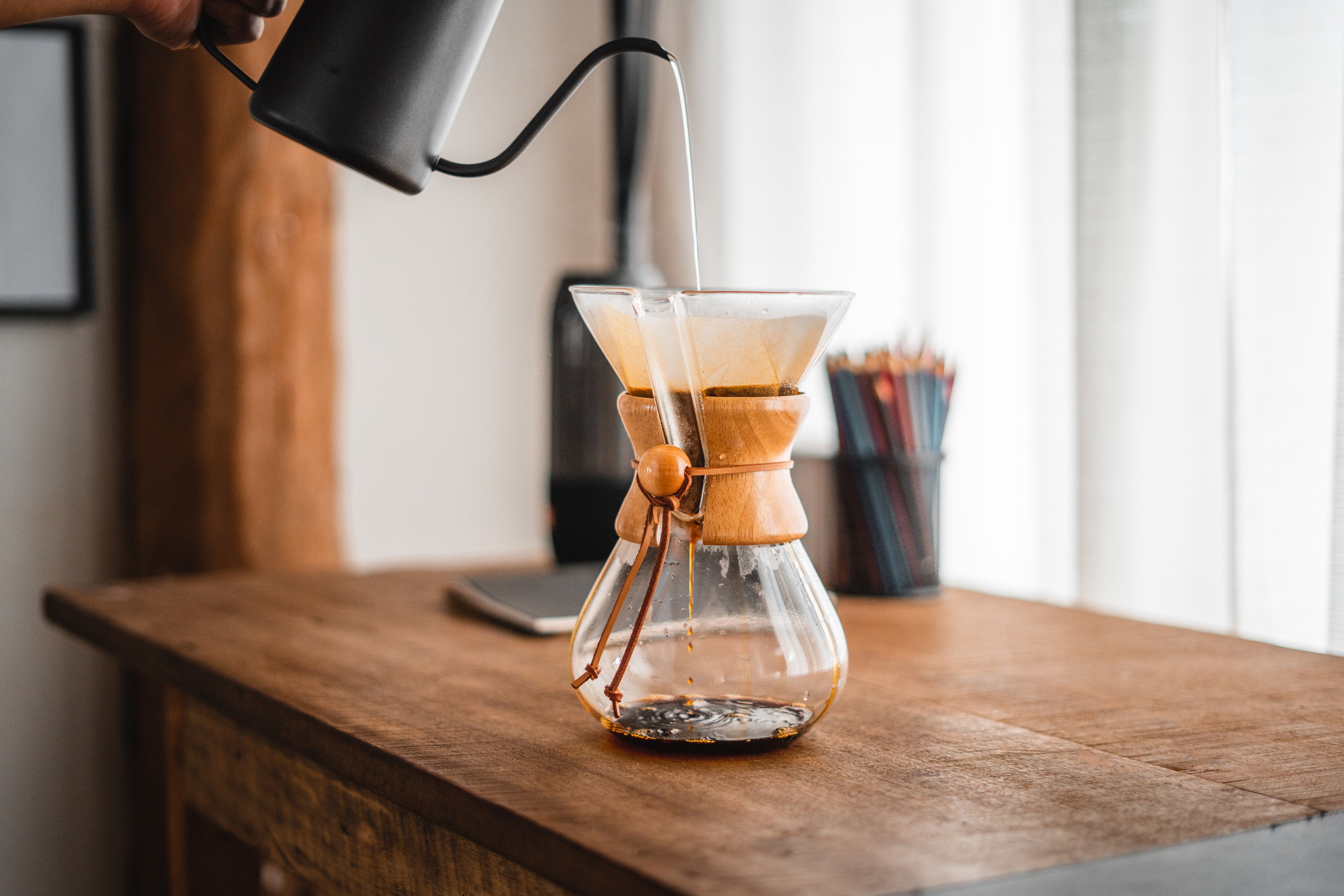
The visual cue matters because grinder numbers are not universal. One grinder’s “medium” may be another grinder’s “fine.” For a cone dripper, the grind may lean a little finer to support enough contact time. For a flat-bottom brewer, medium can work beautifully. For Chemex or larger batches, a slightly coarser setting often helps the water move without clogging the thicker filter.
Taste tells you which way to adjust. If the cup tastes sharp, thin, hollow, or sour, the grind may be too coarse and the water is passing through before enough sweetness is extracted. If the cup tastes bitter, dry, heavy, or muddy, the grind may be too fine and the brew may be over-extracting or draining too slowly.
A burr grinder is the best recommendation because it crushes coffee into more consistent particles. Consistency matters in pour-over: if the grind contains too many boulders and powdery fines at the same time, some pieces under-extract while others over-extract. That can make the cup taste confused even when the coffee itself is good.