
Troubleshooting
Espresso Puck Preparation Part 1: Dose, Distribute, Tamp
Espresso extraction begins long before the portafilter locks into the group head. The shape, density, and uniformity of the coffee puck determine how water moves through it during the brief 25 to 30 seconds of extraction, and the choices made during puck preparation often matter more than any setting on the machine itself. Two baristas using identical coffee, water, and equipment can produce dramatically different shots based entirely on how they prepared the puck.
The work begins with dosing. The amount of coffee in the basket sets the structural foundation for everything that follows. Most modern espresso baskets are designed for specific dose ranges — an 18-gram basket performs best with 17.5 to 19 grams of coffee, a 20-gram basket with 19 to 21 grams. Underdosing produces a thin puck with too much headspace above it, leading to puck disturbance during extraction. Overdosing crowds the basket and prevents proper expansion when water hits the grounds, often producing channeling and bitter shots.
A dosing funnel placed on top of the basket during the grinding step prevents grounds from spilling over the edge and helps direct ground coffee into the basket cleanly. Some grinders deliver coffee in a way that produces uneven mounds; the funnel keeps the dose contained until distribution begins.
Once the dose is in the basket, distribution addresses the natural clumping and uneven density that grinders produce. Even high-end grinders deliver coffee that contains clumps of fines and uneven density patterns. Tamping a clumpy puck creates internal voids and density variations that water exploits during extraction, racing through low-density areas and pooling in high-density areas. The result is channeling regardless of how perfectly the surface appears tamped.
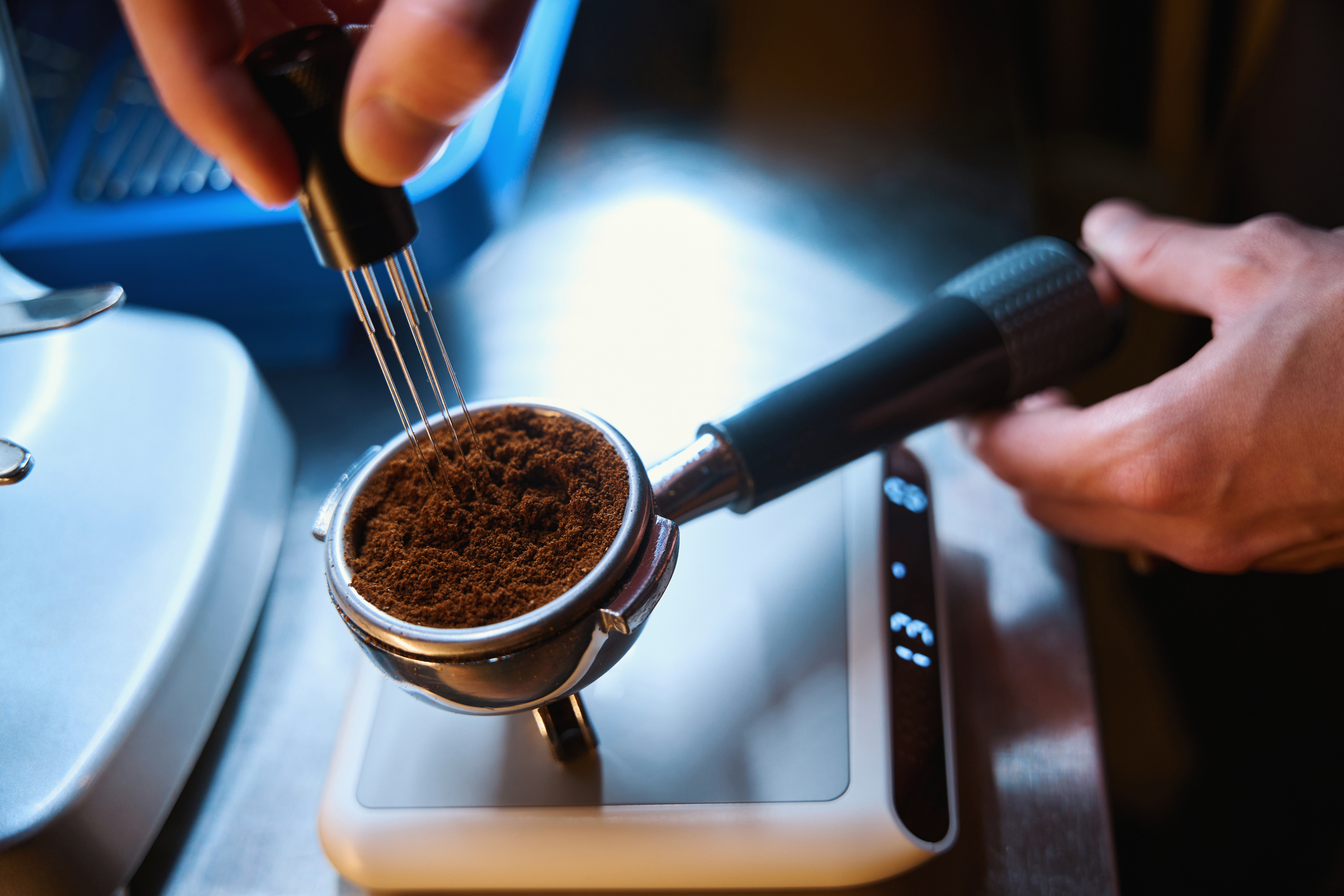
The most widely used distribution method is the Weiss Distribution Technique, commonly called WDT. The technique uses a tool with several thin needles — typically four to eight needles between 0.3mm and 0.5mm diameter — that the user inserts into the dosed coffee and stirs gently in a circular motion. The needles break up clumps and redistribute the grounds so that every part of the puck has uniform density. WDT was developed by John Weiss in 2005 and has become the most reliable method for puck preparation among home espresso users specifically because it compensates for grinder limitations that affect home equipment more than commercial grinders.
After WDT, some baristas use a distribution tool — a flat metal disc with adjustable depth that sits on top of the basket and is rotated to level and pre-compress the puck. The tool is sometimes called an OCD (Ona Coffee Distributor, the original brand), a palm tamper, or simply a leveler. The flat bottom flattens the surface of the grounds while the rotation creates light pre-compression that prepares the puck for final tamping. Distribution tools work best in conjunction with WDT rather than as replacements — WDT addresses internal clumping while the distribution tool addresses surface evenness.
Tamping compresses the prepared grounds into the puck that will resist water pressure during extraction. The standard pressure target is around 30 pounds, though the absolute pressure matters less than the consistency of pressure across multiple shots. A barista who tamps consistently at 25 pounds produces more reproducible results than one who varies between 20 and 35 pounds across shots. The tamper itself should match the basket diameter precisely — a 58mm basket needs a 58.4mm tamper to leave essentially no gap between tamper edge and basket wall, which prevents grounds from escaping up the sides during extraction.
The angle of the tamp matters as much as the pressure. A level tamp produces a flat puck surface that water meets uniformly. A tilted tamp produces a sloped puck that water meets unevenly, channeling toward the side where the puck is thinner. Many baristas use a tamper with a built-in level indicator, or place the portafilter on a flat surface during tamping to ensure verticality. Self-leveling tampers like the Pullman Big Step or Decent's calibrated tampers eliminate angle variation entirely by mechanically ensuring level pressure.
The dose-distribute-tamp sequence is the foundation of every espresso shot. Each step compounds the evenness produced by the previous steps. A disciplined dose followed by careful WDT and a level consistent tamp produces a puck that responds predictably to water and pressure, which is the prerequisite for every other extraction variable to work as intended. Café de Volcán treats this foundation as the work that happens before extraction begins and that determines what extraction can achieve.