
Palate
Developing Your Palate: A Practice for the Curious
Developing a coffee palate is a practice that rewards patience. The ability to distinguish bright acidity from deep acidity, to separate berry notes from stone fruit, to identify the aromatic signatures of different origins — these emerge over months and years of attentive drinking, not in a single weekend of study. The good news is that every cup is a small practice session.
What's worth knowing is that most coffee flavor is actually smell, not taste. The tongue itself only perceives five tastes — sweet, sour, salty, bitter, and umami. The complex notes that tasting note vocabulary describes — jasmine, bergamot, stone fruit, chocolate, caramel — are aromatic compounds reaching the olfactory receptors through retronasal smell, the pathway that connects the back of the mouth to the nasal cavity. This is why holding a cup near the nose before drinking, taking deliberate breaths through the nose while sipping, and slurping coffee aggressively (as professional cuppers do) all dramatically intensify flavor perception. Slurping aerosolizes the coffee and forces aromatic compounds upward through the retronasal passage, producing flavor intensity that quiet sipping cannot match. Most home drinkers can immediately improve their tasting capability by adopting these techniques, which require no equipment or palate development.
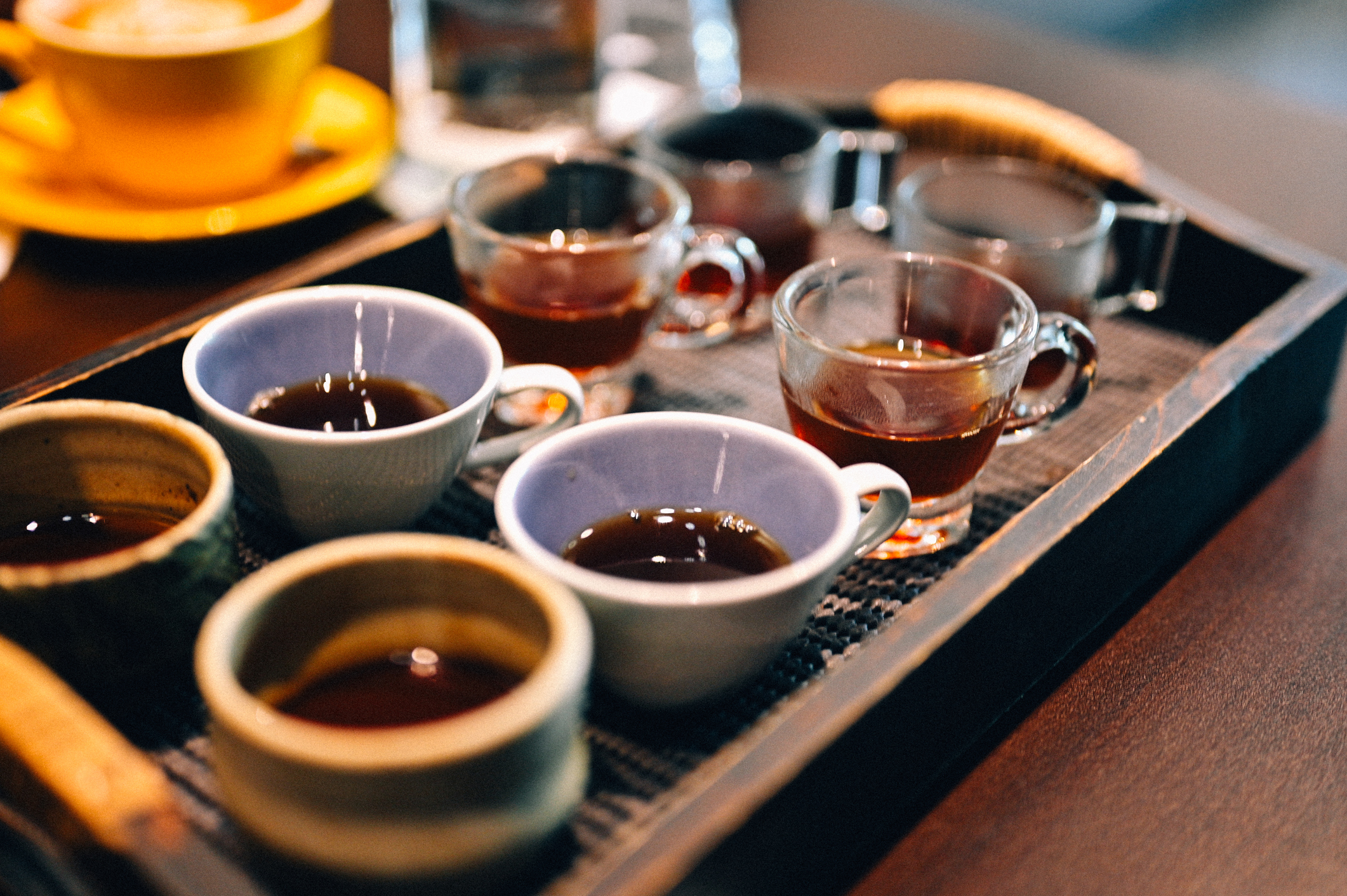
Several approaches help the practice move forward beyond technique. Comparative tasting — drinking two different coffees side by side, or the same coffee prepared two different ways — reveals differences that single cups never quite show. The contrast itself produces sensitivity that absolute tasting cannot. Keeping notes, even brief ones, builds a record the drinker can return to and a vocabulary that gradually sharpens. Writing what you taste forces specificity that thinking what you taste does not. Reading about coffee, from both technical and sensory perspectives, gives the palate new concepts to test against actual experience.
Tasting at different temperatures opens dimensions most casual drinkers miss. Coffee changes character substantially as it cools — aromatic compounds release differently at different temperatures, and acids that hide when the cup is hot become prominent as it cools. Professional cuppers evaluate coffee across multiple temperatures specifically because the compound profile shifts. Home drinkers can practice this by tasting the same cup at brewing temperature, at lukewarm, and at near-room-temperature, noting which qualities emerge at each stage.
Cross-training the palate with adjacent foods accelerates development. Wine tastings build the same olfactory and analytical capabilities that coffee tasting requires. Tea tastings, particularly with high-quality oolongs and aged pu-erh, develop the ability to distinguish complex aromatic profiles. Chocolate tastings exercise the chocolate-and-caramel vocabulary that overlaps with coffee. The skills transfer because the underlying perceptual mechanisms are the same — palate development in any domain strengthens palate capability across all domains.
Visiting roasters and cafés adds another dimension. Tasting coffees prepared by skilled baristas, sometimes alongside the roaster who sourced them, accelerates the learning in ways that drinking alone cannot quite match. The conversations that develop around shared cups produce vocabulary and concepts that solo drinking rarely generates.
Café de Volcán invites drinkers to treat palate development as an ongoing pleasure rather than a goal to reach, because the most rewarding aspect of the journey is the growing sensitivity itself.