
Pour Over
Coffee Bloom, Explained
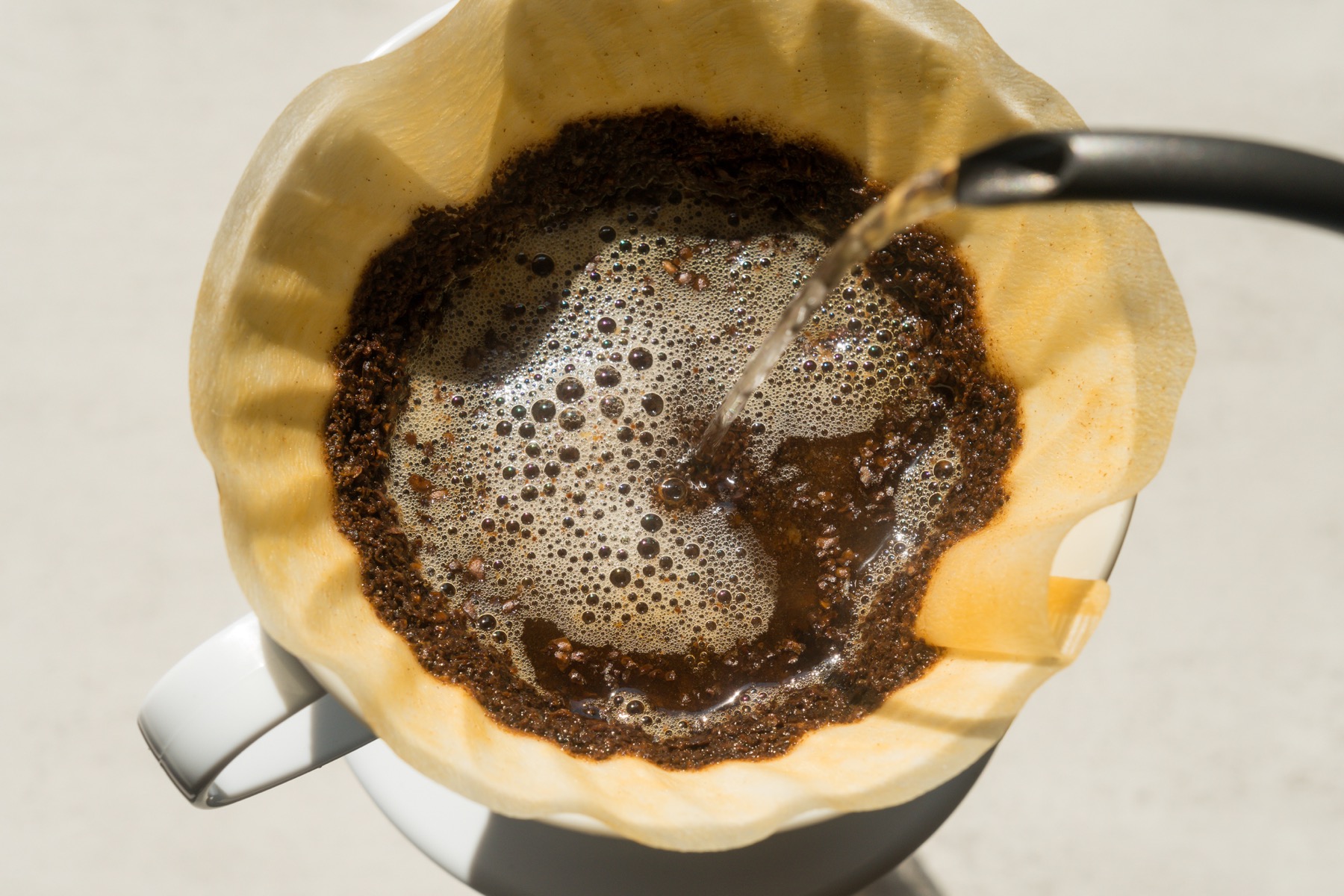
The bloom is the first small pour in a pour-over brew. Hot water hits freshly ground coffee, carbon dioxide escapes from the roasted beans, and the coffee bed rises, bubbles, or loosens. It is one of the most visible signs that coffee is fresh, but it is also a practical brewing step.
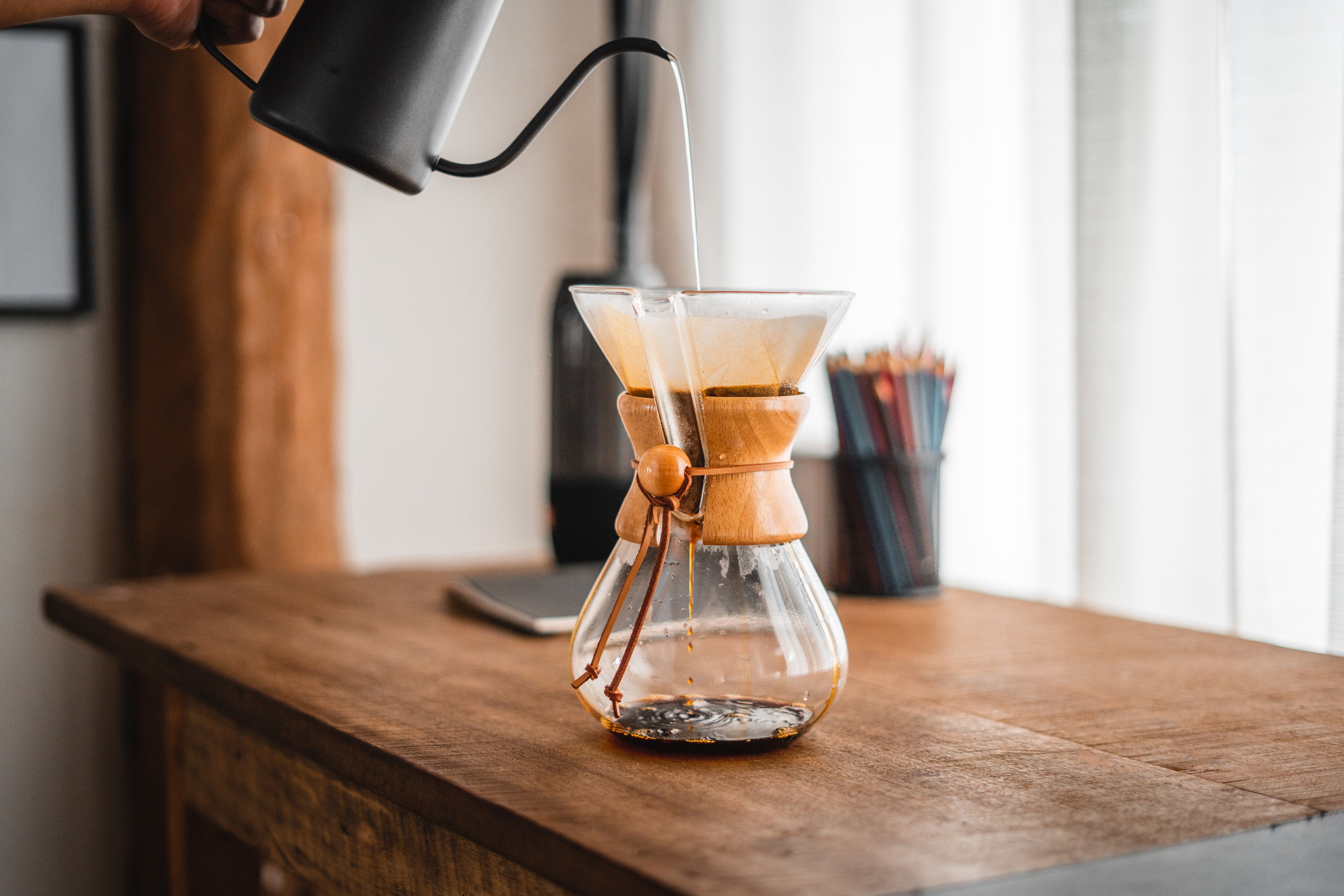
Blooming is used mostly for pour-over and other manual drip methods because water has to pass evenly through an open bed of grounds. If trapped gas pushes water away from dry pockets, extraction can become uneven. A good bloom helps the bed settle so the later pours move through the coffee more predictably.
Other brewing methods handle this differently. French press and cupping immerse all the grounds in water, so the coffee is saturated quickly and does not need a separate bloom step. Espresso uses pressure and sometimes pre-infusion, which is a different tool. Automatic drip machines may include a pre-wet setting, but if they do not, the brewer usually handles the process for you rather than asking you to pause manually.
To bloom a pour-over, start your timer and pour enough hot water to wet all of the grounds thoroughly, usually about two to three times the coffee’s dry weight. For 20 grams of coffee, that means roughly 40 to 60 grams of water. Aim for the center first, then move outward so no dry island remains. A gentle swirl or small stir can help if the bed looks uneven.
The liquid from the bloom is not thrown away. It drains into the server or cup and becomes part of the final brew. After the grounds are fully wet, wait about 30 to 45 seconds before continuing with the main pours. Very fresh coffee may need a little more time; older coffee may barely rise at all. The point is not to chase drama, but to give the coffee bed a fair start before extraction begins.