
Troubleshooting
Channeling: Why Water Chooses the Easy Path
Channeling happens when water finds a path of least resistance through the coffee bed rather than moving through it evenly. Some parts of the bed see too much water and over-extract; other parts see too little and under-extract. The finished cup carries the signature of both extractions at once — sometimes bitter and thin, sometimes sharp and muddled — and no single adjustment to grind or time fully resolves what uneven flow introduced.
Channeling is usually a function of preparation. An uneven coffee bed, with some areas denser than others, invites water to take the easier route. A wet or damaged filter can pull away from the dripper wall and let water escape down the sides. Pouring too aggressively or in one spot can carve a channel directly through the bed.
Preventing channeling starts before the water begins to flow. Leveling the ground coffee in the filter, rinsing the paper to seal it against the wall, and pouring in a steady spiral that covers the whole bed all help.
Specific anti-channeling techniques by method help locate where to focus.
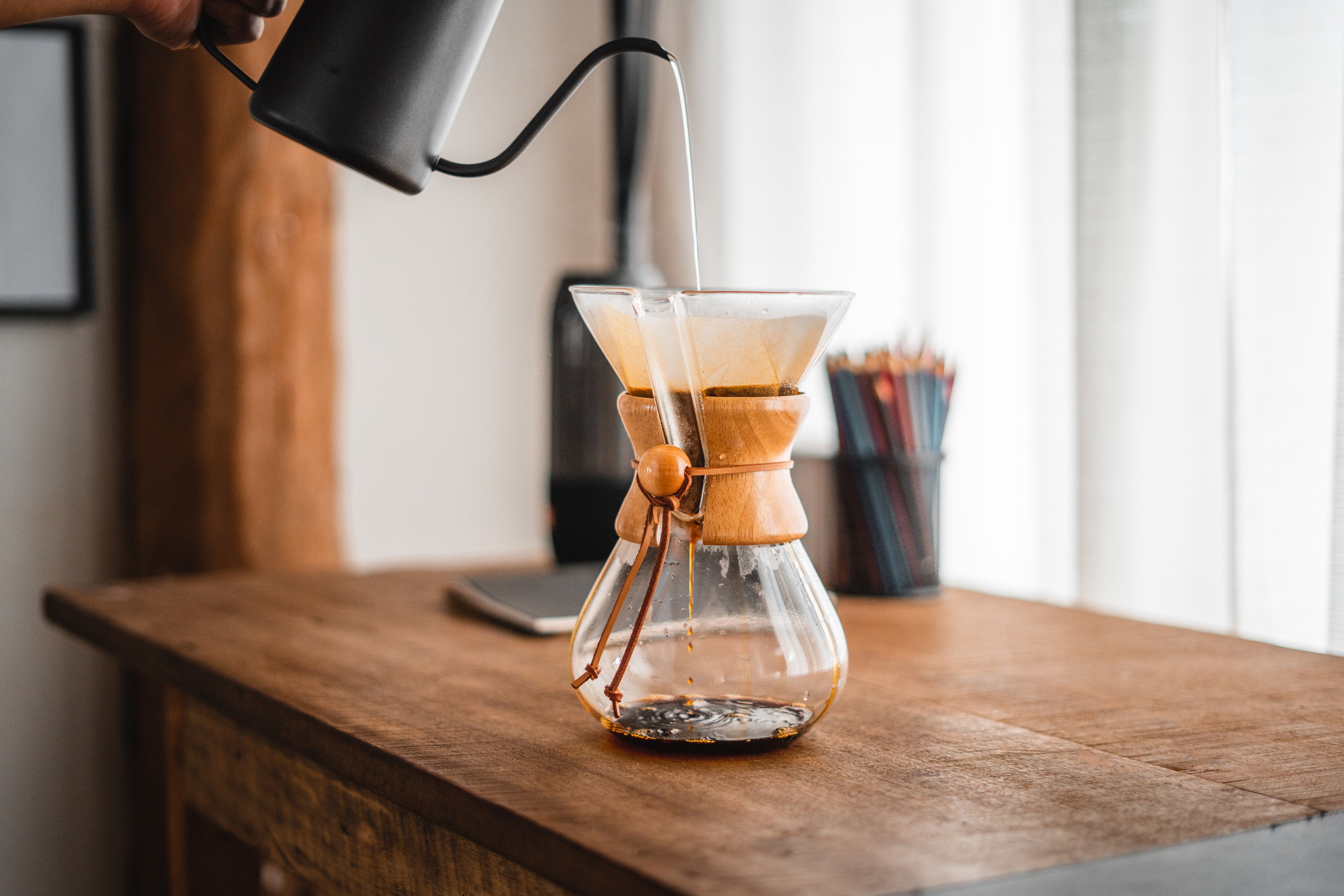
For pour-over like V60 or Kalita Wave, channeling typically appears as visible cracks or holes in the coffee bed during brewing. Prevention starts with a thorough bloom — 2-3 times the coffee weight in water, 30-45 second rest — that pre-wets the entire bed and releases carbon dioxide before the main pour. Pouring slowly from a kettle with a controlled spout rather than a general pitcher prevents the high-velocity streams that carve channels. A Rao spin after the final pour settles the bed flat. If channeling appears mid-brew, gently stirring with a spoon can redistribute the grounds, though this is recovery rather than prevention.
For espresso, channeling is the most visible failure mode and shows as sprayed jets coming from one side of the basket while another side runs dry. Prevention requires careful puck preparation. Distributing the grounds with a WDT (Weiss Distribution Technique) needle breaks up clumps and creates uniform density throughout the puck. Many baristas also use a puck screen — a thin metal mesh disc placed on top of the tamped puck before extraction begins — to further distribute water evenly across the puck surface and reduce surface-level channeling. Puck screens add a small thermal buffer that can drop brewing temperature by 1 to 2°C (1.8 to 3.6°F), but the evenness benefit often outweighs this for users running lighter roasts. Tamping with consistent pressure around 30 pounds at a level angle creates even resistance. Pre-infusion at low pressure for 3-8 seconds before full extraction lets water saturate the puck uniformly, which dramatically reduces channeling at the moment full pressure engages. A pressurized basket can compensate for technique inconsistencies but masks rather than solves the underlying issue.
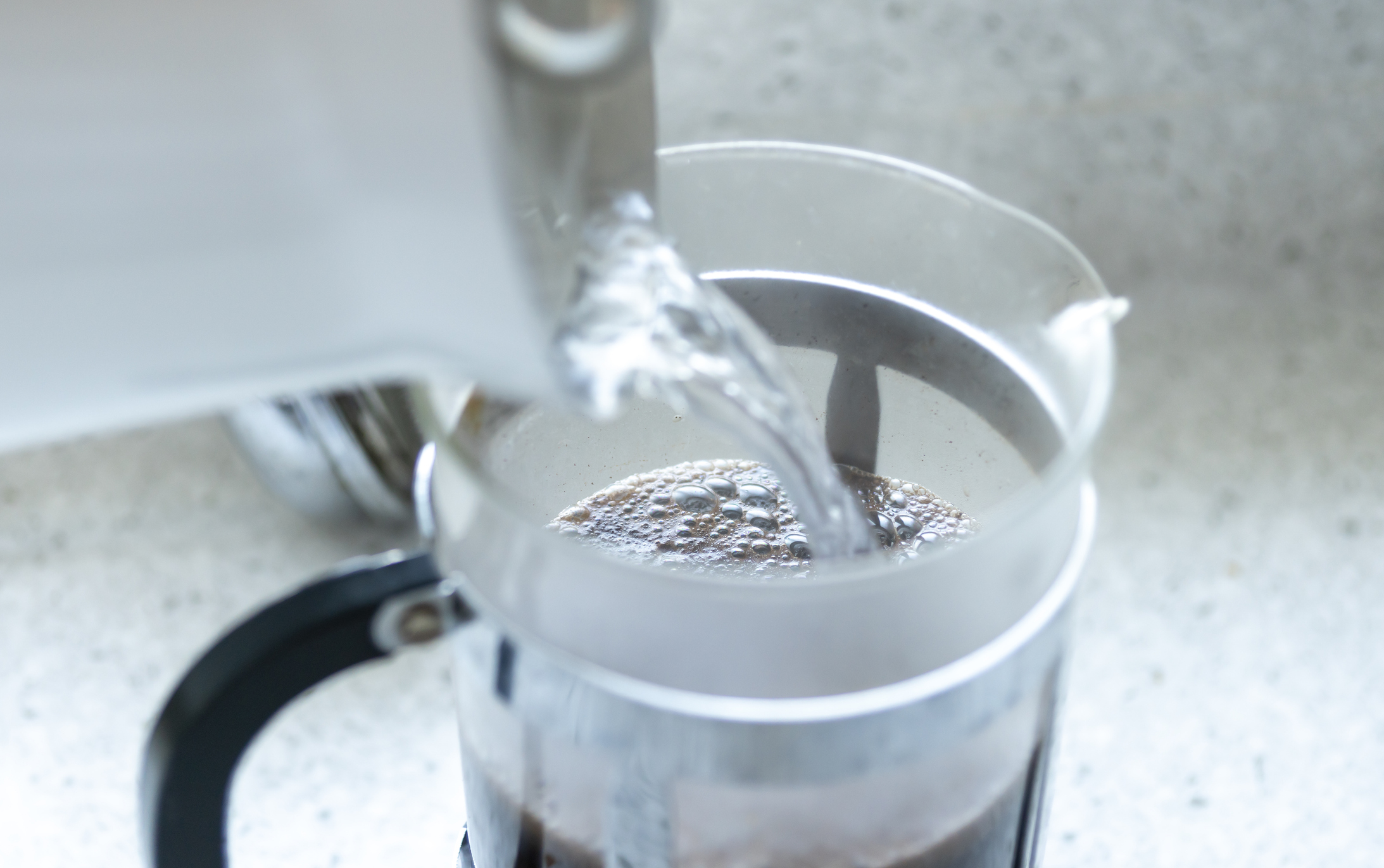
For French press, channeling is less common because immersion brewing keeps the entire bed in contact with water throughout the steep. The closest equivalent failure is uneven steeping when dry pockets form within the slurry. Gently stirring the grounds after pouring water breaks up dry pockets and ensures all the coffee is wetted from the start. Breaking the crust that forms on top during steeping further integrates the grounds with the water. The mesh plunger can also create channeling on the way down if pushed too quickly, forcing water through narrow paths and pulling fines into the cup. Slow, even plunging avoids this.
For drip machines, channeling shows as water draining quickly through one part of the bed while other parts remain dry. The user's main lever is bed preparation before brewing. Leveling the grounds in the basket so the surface is flat rather than mounded prevents water from concentrating in any single spot. Some drip machines benefit from a brief manual pre-wetting — adding a small amount of water to the grounds and letting them sit for 30 seconds before starting the brew cycle — which mimics the bloom phase that pour-over uses. Quality drip machines with shower-head water distribution prevent channeling at the source by spreading water across the entire bed surface from the start.
Café de Volcán suggests brewers treat preparation as part of the extraction itself, because the shape of the bed determines how the water will move through it.