
Grind & Equipment
Burr vs Blade Grinders
The difference between burr and blade grinders is a question of particle size, repeatability, and how evenly water can extract flavor from the coffee.
Blade grinders chop coffee with a spinning blade, almost like a small food processor. The longer they run, the smaller the pieces become, but the pieces do not become uniform. Some particles turn powdery while others remain coarse. That mix of fines and larger fragments creates a brew bed where different pieces of coffee extract at different speeds.
That unevenness shows up in the cup. The smallest particles can extract quickly and bring bitterness, dryness, or muddiness. The larger pieces may under-extract and leave the cup thin, sharp, or hollow. When both happen together, the coffee can taste confused: bitter and sour, heavy and weak, all at once.
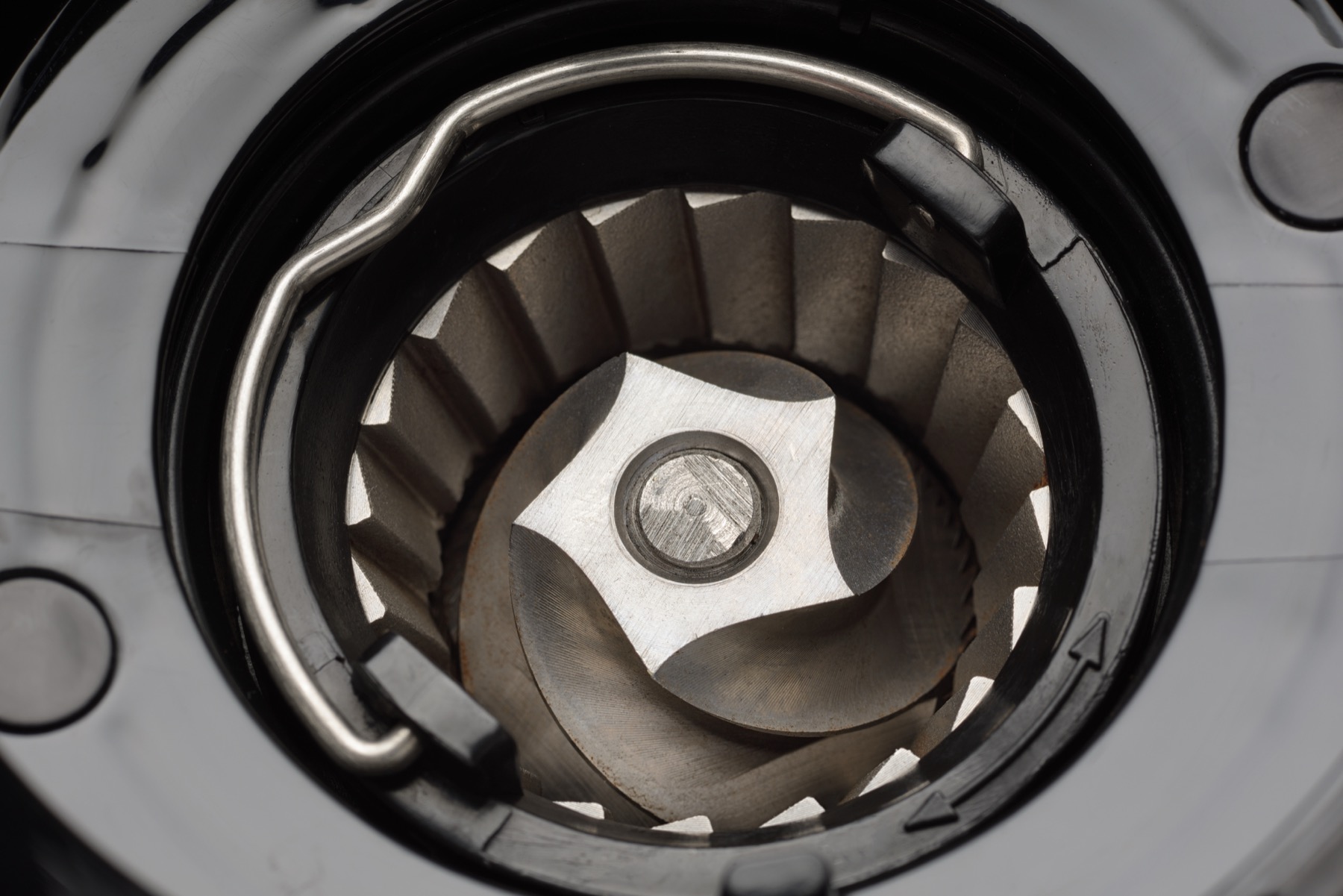
Burr grinders work differently. They use two abrasive surfaces set at a controlled distance from each other, and the beans pass between those surfaces as they are crushed. Conical burr grinders use a cone-shaped burr inside an outer ring. Flat burr grinders use two flatter discs. The designs behave differently, but the purpose is the same: create a more consistent grind so the coffee extracts more evenly.
For most home brewing, a burr grinder is one of the most meaningful upgrades because it improves every method that depends on ground coffee. Pour-over becomes clearer. French press becomes less muddy. Espresso becomes easier to dial in. The gain is not just precision for its own sake; it is sweetness, balance, and the ability to repeat a cup you liked yesterday.