
Design
Building a Home Coffee Setup Part 3: Advanced Setups and Home Espresso
The advanced tier covered here serves two distinct populations of home coffee drinkers. The first is filter-brewing enthusiasts who want equipment beyond the premium tier covered in Part 2. The second is drinkers expanding into home espresso, which requires substantially more investment than home filter brewing because the method's tolerances are tighter and the equipment is more complex.
Advanced filter setups
For filter brewing specifically, the advanced tier produces improvements over the premium tier. Drinkers reaching this level usually do so for workflow refinements, capability expansion, or because they've developed specific preferences that premium equipment doesn't perfectly serve.
Advanced-tier grinders are commercial-grade grinders that occasionally appear in home setups. These produce particle consistency that exceeds what any home-tier grinder can match, with the trade-off being substantial size, noise, and cost. Most drinkers reaching this tier have discovered specific characteristics in their cups that they want to refine — typically the cleanest possible separation of flavor notes for very lightly roasted coffees, or maximum particle consistency for competition-style brewing.
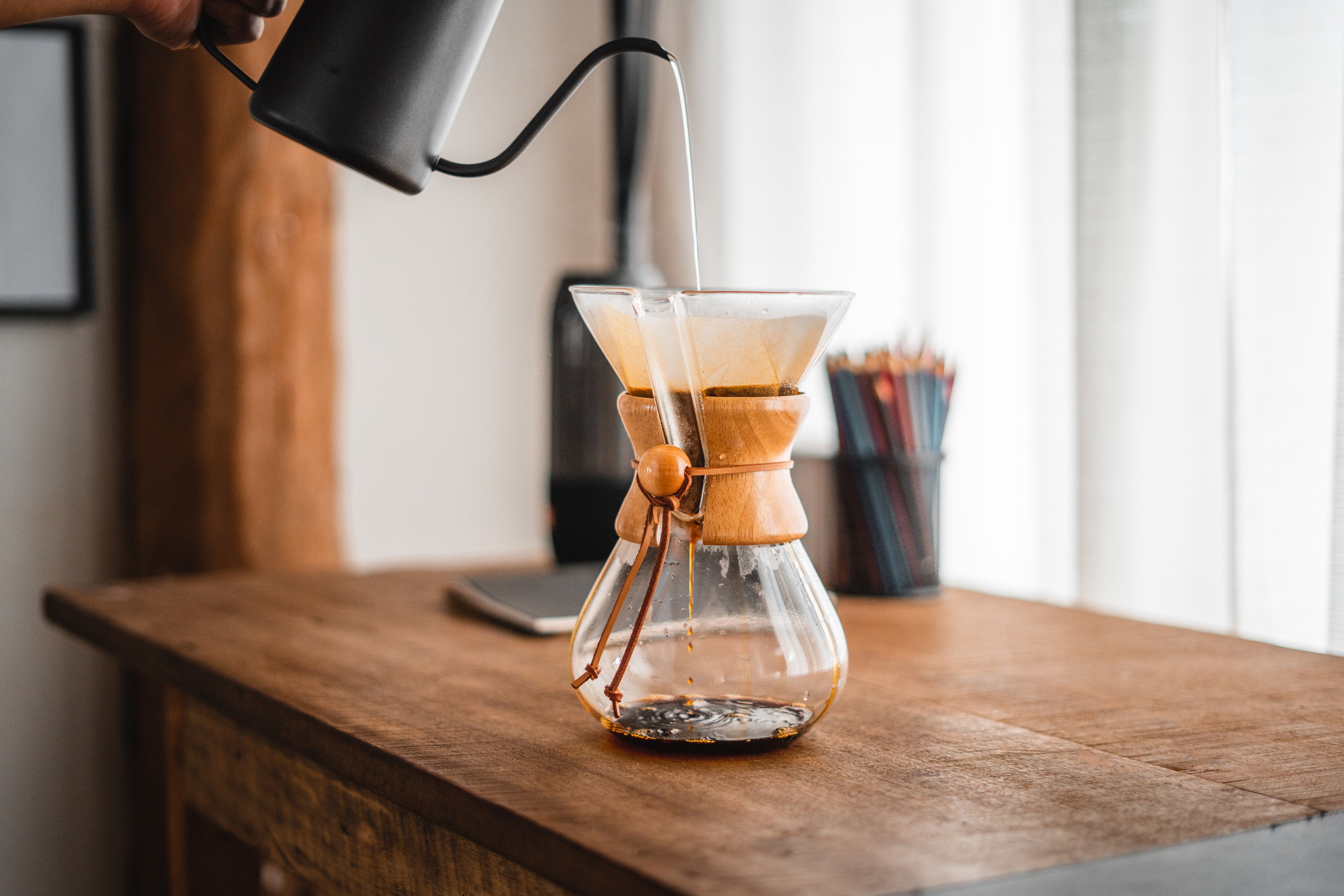
Multiple drippers become standard at advanced tier. Drinkers maintain V60, Kalita Wave, Chemex, and sometimes specialty drippers like the Origami or April Brewer for different coffees and different moods. Each dripper produces a slightly different cup character, and advanced enthusiasts develop preferences for matching specific coffees to specific drippers.
Specialized water systems reach the advanced tier through complete custom water programs. Some advanced drinkers build their own water from distilled base plus precise mineral additions, calibrated specifically to their preferred coffee origins. Different origins respond best to slightly different water profiles, and advanced enthusiasts sometimes maintain multiple water profiles for different coffees.
Refractometers measure brew strength precisely as TDS percentage, allowing drinkers to verify extraction mathematically rather than only by taste. The refractometer is the diagnostic tool that closes the feedback loop on brewing technique — every cup gets measured, and adjustments respond to data rather than impression.
Home espresso setup
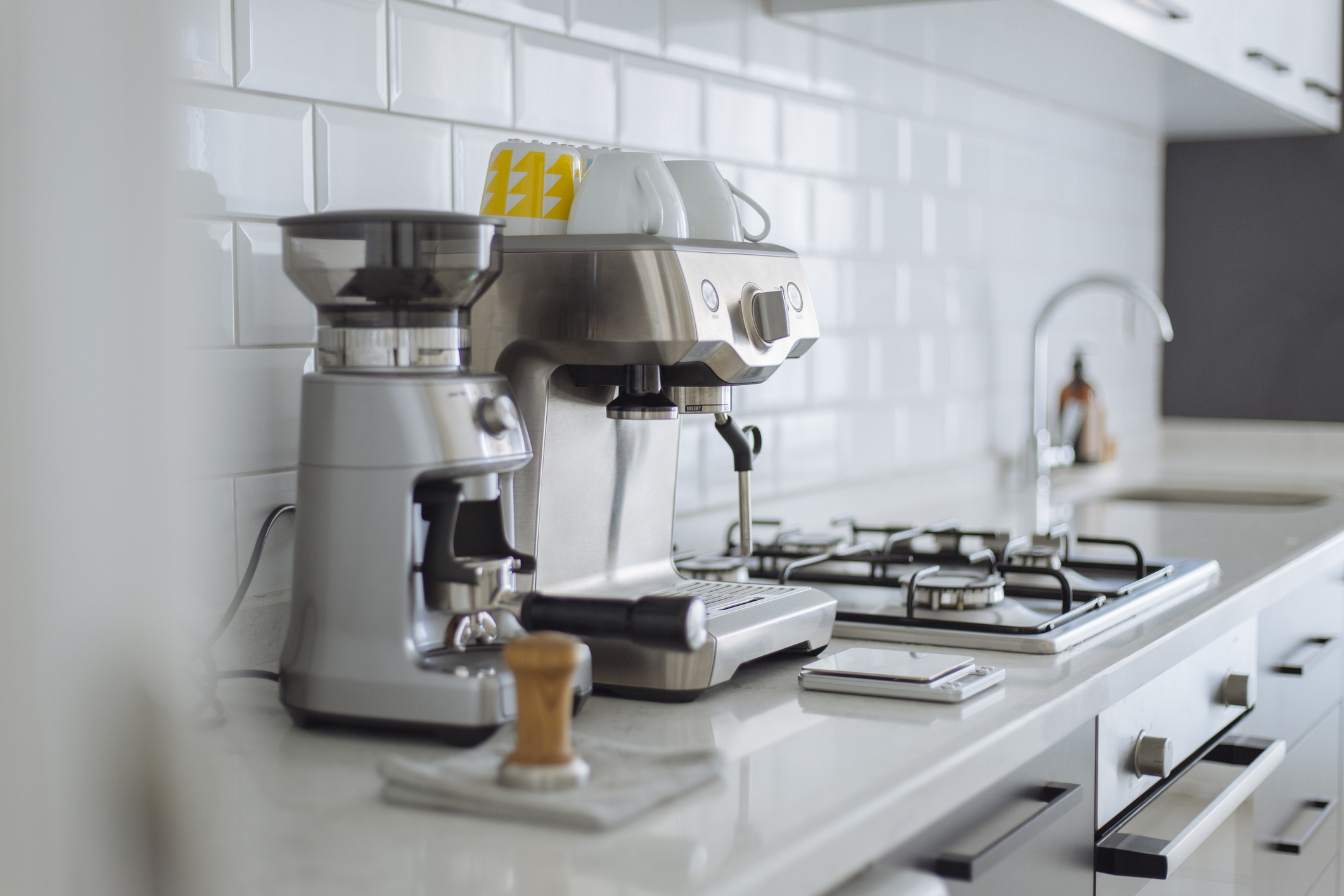
Espresso changes the equipment economics fundamentally. This is partly because espresso machines are mechanically complex devices that maintain water at precise temperature and pressure, and partly because espresso grinding requires much finer particles with much tighter consistency than filter grinding.
Puck preparation accessories are essential rather than optional at this tier. WDT distribution tools, leveling tools, calibrated tampers, and puck screens together cost a meaningful fraction of the machine itself and produce shots dramatically more consistent than the same machine without them. Skipping these accessories typically produces inconsistent shots that frustrate the drinker into thinking their machine or technique is at fault when the actual issue is preparation.
Water treatment becomes essential rather than optional at mid-range home espresso. Espresso machines are more sensitive to water chemistry than filter brewers because the high pressure and temperature accelerate scale formation. Drinkers running mid-range machines on untreated tap water typically destroy machines within years through scale damage. Reverse osmosis with remineralization, or commercial espresso water packets, prevent this damage and produce cleaner shots simultaneously.
Premium and serious home espresso
Premium home espresso machines represent commercial-grade equipment in home formats. These machines produce shots that meet or exceed café standards consistently. The investment is substantial — these are appliance-tier purchases comparable to high-end ovens or refrigerators in household budget terms. Drinkers reaching this tier typically pull multiple shots daily, host frequently, or simply value their daily espresso routine at a level that justifies appliance-tier investment in the equipment that produces it.
The drinkers who genuinely benefit from home espresso are those who pull at least daily, who appreciate the practice of the technique, and who have the patience to develop competence over months rather than expecting immediate café-quality shots. The journey from beginner to advanced home coffee enthusiast usually happens over years, and equipment that fits the drinker's actual usage typically produces more enjoyment than equipment that exceeds it.