
Design
Building a Home Coffee Setup Part 1: The Entry-Level Specialty Foundation
The hierarchy of investment for home coffee runs in a specific order: grinder first, brewer second, water and accessories third, and refinements last. Every step builds on the previous one. Skipping ahead in the hierarchy produces diminishing returns because the upstream limitation constrains what the downstream equipment can deliver. The entry-level setup covered in this article focuses on the foundation that produces excellent specialty coffee at modest cost.
A burr grinder is the single most important piece of equipment in any home coffee setup. Burr grinders work by crushing coffee between two surfaces (either flat or conical burrs) at a precisely controlled distance, producing particles of consistent size. Replacing a blade grinder is the single highest-return upgrade most home coffee drinkers can make.
Manual burr grinders represent the best value at the entry level. They produce particle consistency comparable to electric grinders costing several times as much, with the trade-off being the physical effort of grinding. Hand-grinding 30 grams of coffee for a pour-over takes about 90 seconds of moderate effort — meaningful but not exhausting, and the daily practice becomes part of the brewing routine for many drinkers.
For drinkers who prefer electric, electric grinders below a certain price point typically struggle with pour-over consistency and should be avoided if pour-over brewing matters to the drinker.
Once a quality grinder is in place, the brewing equipment for entry-level specialty setups is genuinely affordable.
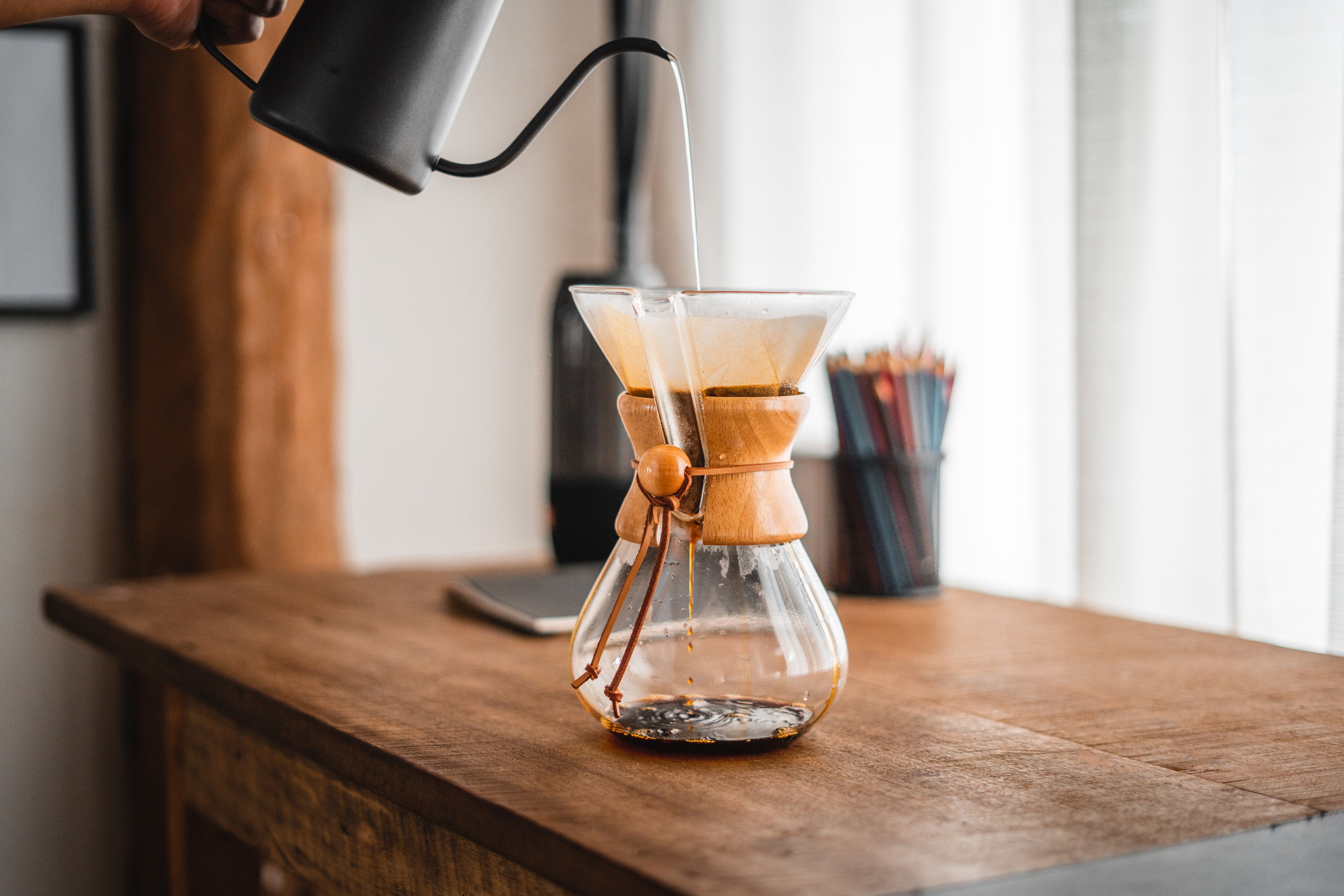
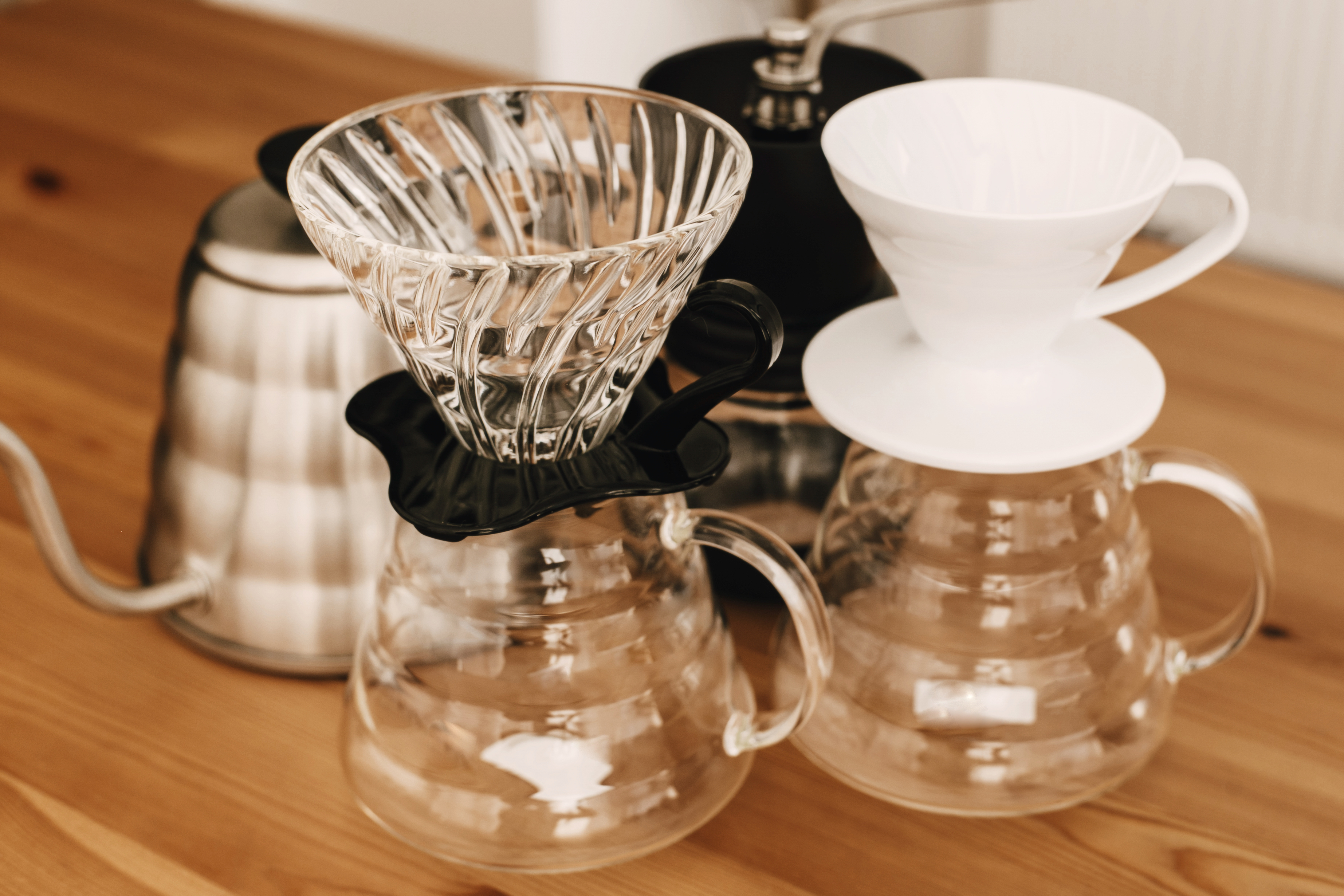
A pour-over setup is the most common entry to specialty home brewing. A Hario V60 or Kalita Wave dripper, paired with paper filters and a basic gooseneck kettle, produces excellent cups with minimal investment. A stovetop gooseneck kettle without electronic temperature control works fine for drinkers who use a kitchen thermometer or simply heat water to a brief simmer and let it rest 30 seconds before pouring. The full pour-over setup at entry level requires the dripper, paper filters, the kettle, and a digital scale.
A French press setup is even simpler. A quality French press, paired with a kettle and a digital scale, produces full-bodied immersion-style coffee with minimal equipment overhead. The French press tolerates less precise water temperature than pour-over, which makes it forgiving for drinkers without temperature-controlled kettles.
An AeroPress setup combines the lowest cost with the most versatility. The AeroPress device itself is inexpensive, paper filters last hundreds of brews per pack, and the brewer handles concentrated short brews, extended press brews, and inverted-method brews depending on the drinker's preference.
A basic drip machine can fit entry-level specialty if chosen carefully. Most cheap drip machines fail to produce specialty-quality coffee because they don't reach proper brewing temperature, distribute water poorly across the bed, or both.
Water quality matters at every tier, and entry-level water solutions can produce most of the benefit.
A Brita pitcher removes chlorine and reduces some hardness from tap water, which is sufficient improvement for most municipal water supplies. The pitcher costs less than the cheapest specialty coffee equipment and produces immediate improvement in cup taste. Drinkers in regions with very hard water or unreliable tap water benefit from stepping up to Third-Wave Water packets added to distilled water, which produces consistently mineralized water at SCA-standard levels.
A digital scale with 0.1g precision is essential for any specialty setup. Scales with built-in timers help with pour-over technique by tracking elapsed time alongside weight, which makes consistent brewing substantially easier.
An airtight coffee storage container extends bean freshness from about a week to about three weeks. This is invisible improvement until skipped — coffee deteriorates rapidly when exposed to oxygen, and proper storage preserves the quality the drinker paid for.
A complete entry-level specialty setup — manual burr grinder, V60 or Kalita Wave with filters, gooseneck kettle, digital scale, basic water filtration, and storage container — produces cups that reveal the full character of good specialty coffee. The setup occupies modest counter space, requires modest investment, and delivers cup quality that exceeds the vast majority of café coffee outside of dedicated specialty operations.
Espresso has dramatically different equipment requirements that escalate quickly into higher tiers. Part 3 of this article covers home espresso considerations specifically.
Part 2 covers the premium tier that builds on this foundation for drinkers ready to invest further in their daily brewing experience.